30 Other Ways to Say “You’re Welcome” (With Examples)
Whether you have just helped a coworker with a report, held a door open for a stranger, or answered a customer’s question, saying “you’re welcome” can start to feel automatic. It is polite, but it does not always capture the tone you want. Learning other ways to say you’re welcome gives you more control over how warm, professional, or playful your reply sounds.
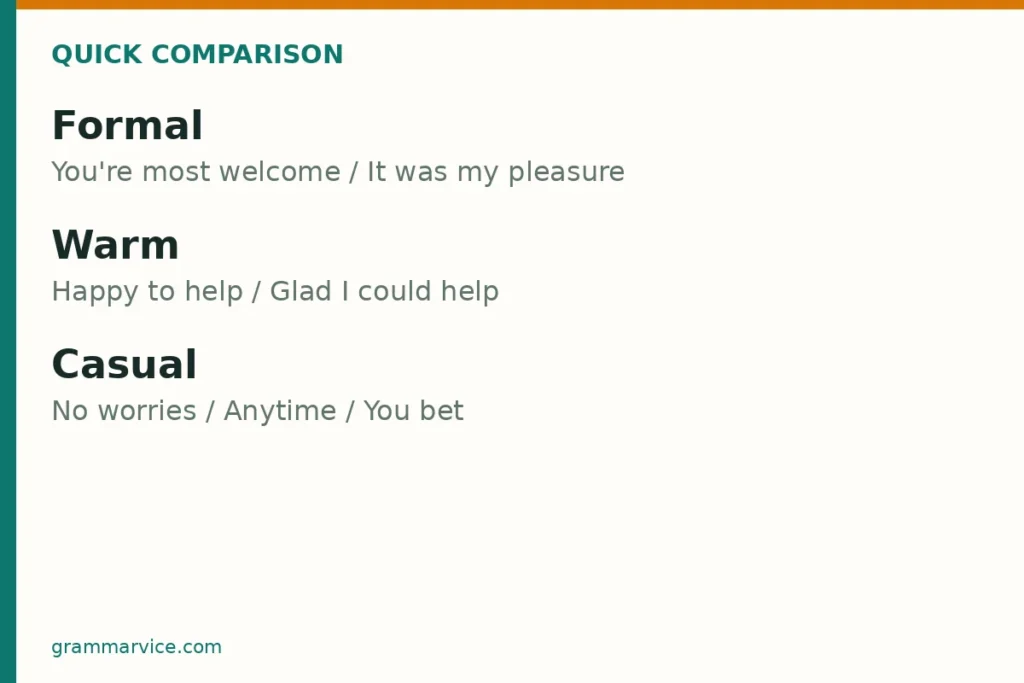
Quick answer: Some of the best all-purpose alternatives to “you’re welcome” are “My pleasure,” “Happy to help,” and “Anytime.” For work and email, “Glad I could assist” and “Certainly” sound polished, while “No problem” and “No worries” work better in casual conversations.
What Does “You’re Welcome” Mean?
“You’re welcome” is the traditional reply to “thank you.” It tells the other person that their thanks were received and that the help was given willingly. According to Merriam-Webster’s definition of “you’re welcome,” the phrase is used as a polite response to thanks.
It can be used in almost any situation, from a small favour to a major project. The challenge is that it can sound repetitive if you use it several times a day. That is why many people look for a you’re welcome synonym formal enough for work, or a relaxed version for friends.
Is “You’re Welcome” Professional or Polite?
Yes, “you’re welcome” is both professional and polite. It is safe in emails, meetings, customer service, and everyday conversation. It does not sound rude, casual, or overly familiar.
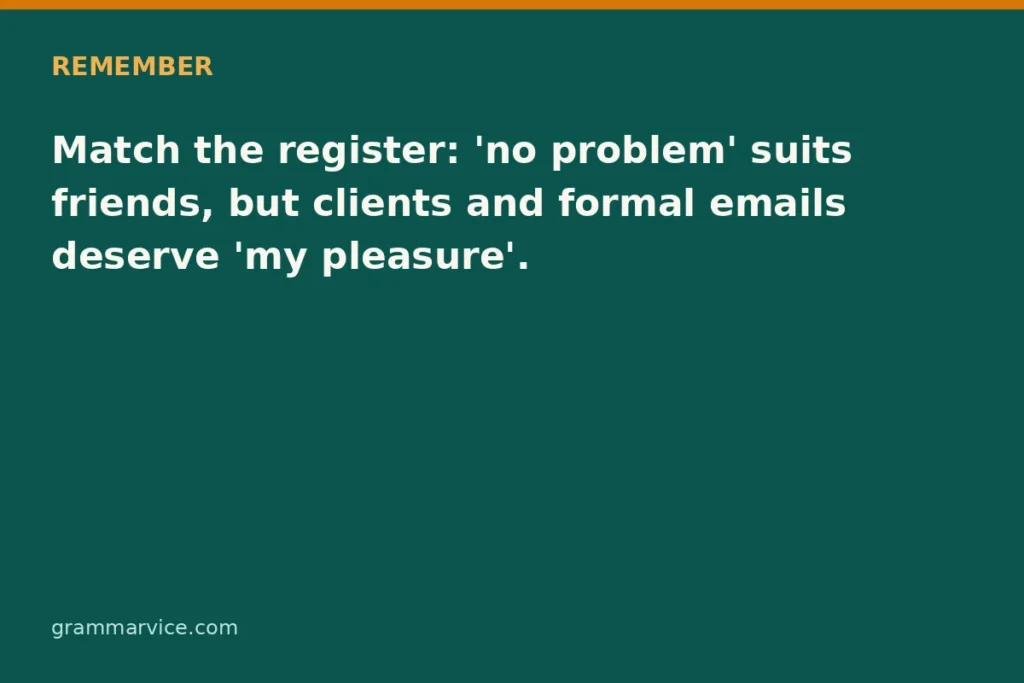
However, it can sound a little flat in some settings. A warm alternative such as “My pleasure” can make a customer feel valued. A precise professional reply such as “Glad I could assist” can sound more confident in an email. The best choice depends on your relationship with the person, the setting, and the size of the favour.
Quick Top Picks: The 8 Best Alternatives at a Glance
If you only need a fast answer, these eight options cover most situations:
- My pleasure — warm and professional
- Happy to help — friendly and work-safe
- Glad I could assist — polished for email
- Certainly — formal and concise
- Anytime — warm and casual
- Of course — confident and natural
- No problem — relaxed and everyday
- No worries — friendly and informal
Professional and Email-Safe Alternatives to “You’re Welcome”
These alternatives work well in offices, client emails, and customer service. They sound respectful without sounding stiff.
1. My Pleasure
Tone: Warm and professional. Example: “My pleasure — I’m glad the report was useful.”
2. Happy to Help
Tone: Friendly and reliable. Example: “Happy to help — just let me know if you need anything else.”
3. Glad I Could Assist
Tone: Polished and email-safe. Example: “Glad I could assist with the presentation.”
4. Certainly
Tone: Formal and concise. Example: “Certainly — I’ll send the updated file right away.”
5. It Was My Pleasure
Tone: More formal than “My pleasure.” Example: “It was my pleasure to support your team today.”
6. You’re Most Welcome
Tone: Gracious and slightly formal. Example: “You’re most welcome — I hope the meeting went well.”
7. At Your Service
Tone: Formal, often used in hospitality and customer service. Example: “At your service — please let me know if you need anything during your stay.”
8. I’m Here Whenever You Need
Tone: Supportive and reassuring. Example: “I’m here whenever you need — don’t hesitate to ask.”
9. Don’t Mention It
Tone: Polite and modest. Example: “Don’t mention it — I was happy to help.”
10. It’s No Trouble at All
Tone: Reassuring and professional. Example: “It’s no trouble at all — I’m glad I could help.”
How to Say “You’re Welcome” in an Email: Replies to a Boss, a Client and a Colleague
Knowing how to say you’re welcome in an email matters because tone is harder to read in writing. A short, clear reply usually works best. These copy-ready examples show different ways to say you’re welcome professionally in an email.
Reply to a Boss’s Thank-You
“Thank you for your kind message. I’m glad I could help, and I’ll keep you updated on the next steps.”
This is a strong answer to how to respond to a thank you message professionally from boss, because it is respectful, confident, and focused on the work.
Reply to a Client’s Thank-You
“My pleasure — I’m glad we could resolve this for you. Please reach out if you need anything further.”
This reply is warm but professional, and it invites future contact without sounding pushy.
Reply to a Colleague’s Thank-You
“Anytime! Happy to help — just let me know if you need a hand with the next part.”
This version is friendly and relaxed, which suits a colleague you work with regularly.
If you are wondering how to respond to thank you professionally, start with appreciation, confirm the help was no trouble, and end with a helpful next step. That structure works for most professional emails. For more guidance on professional replies, see our guide to how to respond to thank you professionally in email.
Warm and Heartfelt Alternatives
These options suit friends, family, and anyone you want to make feel genuinely appreciated.
11. It Means a Lot to Hear That
Tone: Sincere and warm. Example: “It means a lot to hear that — thank you for saying so.”
12. I’m So Glad It Helped
Tone: Caring and personal. Example: “I’m so glad it helped — I was hoping it would.”
13. That’s What Friends Are For
Tone: Warm and familiar. Example: “That’s what friends are for — I’m always here for you.”
14. I’d Do It Again in a Heartbeat
Tone: Affectionate and enthusiastic. Example: “I’d do it again in a heartbeat — you know that.”
15. You Deserve the Best
Tone: Kind and generous. Example: “You deserve the best — I’m happy I could help.”
16. It Was Nothing, Really
Tone: Modest and warm. Example: “It was nothing, really — I enjoyed helping.”
17. You’re Always Welcome Here
Tone: Welcoming and heartfelt. Example: “You’re always welcome here — come back anytime.”
Casual Alternatives for Texts and Chats
These replies are short, natural, and ideal for texting.
18. Anytime
Tone: Warm and casual. Example: “Anytime! 😊”
19. Of Course
Tone: Confident and natural. Example: “Of course — no need to thank me!”
20. No Problem
Tone: Relaxed and everyday. Example: “No problem at all!”
21. No Worries
Tone: Friendly and informal. Example: “No worries — happy to help.”
22. You Got It
Tone: Casual and confident. Example: “You got it!”
23. Sure Thing
Tone: Easygoing and friendly. Example: “Sure thing — anytime.”
24. No Sweat
Tone: Slang and relaxed. Example: “No sweat — it was easy.”
25. All Good
Tone: Casual and reassuring. Example: “All good — glad it worked out.”
26. Bet
Tone: Modern slang, very informal. Example: “Bet — I’ve got you.”
27. For Sure
Tone: Casual and positive. Example: “For sure — happy to help.”
Funny and Playful Ways to Say “You’re Welcome”
These funny ways to say you’re welcome work best with friends and close coworkers who enjoy humour.
28. I Know, I’m Amazing
Tone: Playful and cheeky. Example: “I know, I’m amazing — but you’re welcome!”
29. I’ll Add It to Your Tab
Tone: Joking and lighthearted. Example: “I’ll add it to your tab — just kidding!”
30. That’s What I’m Here For
Tone: Confident and funny. Example: “That’s what I’m here for — saving the day, one spreadsheet at a time.”
31. You Owe Me a Coffee
Tone: Playful and teasing. Example: “You owe me a coffee — but seriously, you’re welcome!”
Customer Service Alternatives: Thanking the Customer Back
In customer service, it helps to thank the customer as well. This turns a simple reply into a positive experience.
32. Thank You for Choosing Us
Tone: Professional and appreciative. Example: “Thank you for choosing us — we’re happy to help.”
33. We Appreciate Your Business
Tone: Formal and customer-focused. Example: “We appreciate your business and are glad we could help.”
34. It’s Always a Pleasure Serving You
Tone: Warm and service-oriented. Example: “It’s always a pleasure serving you.”
35. Thanks for Reaching Out — We’re Glad to Help
Tone: Friendly and helpful. Example: “Thanks for reaching out — we’re glad to help with this.”
36. We’re Here to Make Things Easier for You
Tone: Supportive and customer-focused. Example: “We’re here to make things easier for you — just let us know what you need.”
These creative ways to say you’re welcome show that a reply can do more than close a conversation. It can build trust and encourage the customer to return. For more ideas on softening a reply, see our guide to other ways to say “same here.”
Which One Should You Use? A Quick Guide
| Situation | Best phrase | Why it works |
|---|---|---|
| Email to a boss | Glad I could assist | Polite, confident, and professional |
| Email to a client | My pleasure | Warm and customer-focused |
| Text to a friend | Anytime | Short, warm, and natural |
| Customer service reply | Thank you for choosing us | Thanks the customer back |
| Funny reply to a close friend | You owe me a coffee | Playful without sounding rude |
Example: One Thank-You Reply as an Email and as a Text
Formal email version: “Thank you for your message. I’m glad I could assist, and please let me know if you need anything further.”
Text message version: “Of course! Happy to help anytime 😊”
The email version is longer and more formal, while the text version is short and friendly. Both say the same thing, but the tone matches the channel.
Mistakes to Avoid When Responding to “Thank You”
- Using a sarcastic “uh-huh” reply: It can sound dismissive, especially in writing.
- Using “no problem” with the wrong tone: It can sound like the favour was a problem in the first place, particularly in formal settings.
- Being over-formal with friends: A stiff reply such as “It was my pleasure to be of service” can sound strange in a casual chat.
- Ignoring the thanks: Even a short “Anytime” is better than no reply.
One last tip before the questions below: if you are collecting other ways to say you’re welcome professionally, keep a short personal list for work and a separate one for friends. A formal reply like “Glad I could assist” belongs in the first list, while a you’re welcome synonym slang option like “No sweat” or “Bet” belongs in the second. And when the thanks are for a favour connected to a trip, a party or a break, it also helps to know other ways to say enjoy yourself, so your reply and your good wishes match.
Frequently Asked Questions
How do you respond to “thank you” professionally in an email?
Use a short, polite reply such as “Glad I could assist” or “My pleasure.” Add a helpful next step if needed, such as “Please let me know if you need anything further.” Keep the tone warm but professional.
Is it rude to say “no problem” instead of “you’re welcome”?
No, it is not rude in most casual settings. However, in formal emails or customer service, “My pleasure” or “Glad I could assist” may sound more polished. Tone and context matter more than the exact words.
What is the most formal way to say “you’re welcome”?
“It was my pleasure” and “At your service” are among the most formal options. “Certainly” is also formal and concise, especially in professional emails.
What can I say instead of “you’re welcome” in a text message?
Try “Anytime,” “Of course,” “No worries,” or “You got it.” These replies are short, friendly, and natural for texting.
How do you reply to a thank-you email from your boss?
Thank them for their message, confirm you were glad to help, and mention next steps if relevant. For example: “Thank you for your kind message. I’m glad I could help, and I’ll keep you updated.”
What are some funny ways to say “you’re welcome”?
Playful options include “I know, I’m amazing,” “I’ll add it to your tab,” and “You owe me a coffee.” Use these only with people who will enjoy the humour.
Conclusion
There are many other ways to say you’re welcome, from the polished “Glad I could assist” to the casual “Anytime” and the playful “You owe me a coffee.” The best reply depends on who you are talking to, where you are, and how formal the situation is. Other polite ways to say you’re welcome, such as “My pleasure” and “Happy to help,” work in almost any setting. With a little practice, you can move beyond the same automatic reply and choose words that sound thoughtful, confident, and natural. Other ways to say my pleasure include “It was my pleasure” and “It’s always a pleasure serving you,” which add extra warmth in professional settings.