30 Other Ways to Say “Welcome Back” (With Examples)
Finding other ways to say welcome back can make a greeting feel more personal, thoughtful, and appropriate for the situation. Whether you’re welcoming a coworker after time away, greeting a friend returning from vacation, or writing a message to someone coming back to school, the right words can make their return feel special.
Quick answer: Some of the best alternatives to “welcome back” include “It’s good to pick up where we left off,” “Thank you for rejoining us,” “We saved your place,” and “Look who’s back!” Choose a professional expression for workplace settings, a heartfelt greeting for loved ones, or a playful alternative for friends and close coworkers.
What Does “Welcome Back” Mean?
“Welcome back” is a friendly expression used to greet someone who has returned after being away. It communicates happiness about their return and acknowledges that their presence is appreciated. The person might be returning to work, school, home, a social group, or a familiar activity.
The phrase combines two simple ideas: “welcome” expresses a friendly reception, while “back” indicates that someone has returned to a place or situation they were previously part of. You can explore the meaning of welcome in the Cambridge Dictionary for its broader definition and usage.
For example, you might say “Welcome back” to an employee returning from vacation, a student starting a new semester, or a friend you haven’t seen in several months.
Although the expression works in almost any setting, changing the wording can make your greeting more meaningful. A formal workplace message may call for a different expression than a funny text to a close friend. The best welcome-back messages recognize the person’s return without making them feel uncomfortable about their absence.
Is “Welcome Back” Professional or Polite?
Yes, “welcome back” is both professional and polite. It is a perfectly acceptable greeting in business emails, workplace conversations, team announcements, classrooms, and everyday interactions. Its friendly tone makes it suitable for most professional environments without sounding overly formal.
However, the expression can sometimes feel generic, especially when welcoming someone who has been away for an extended period. Choosing a more specific greeting can communicate appreciation, acknowledge their contribution, or make their return feel more personal.
For example, a manager might write, “Thank you for rejoining us. We’re looking forward to working together again.” This sounds more tailored than a simple “Welcome back” while maintaining a respectful business tone.
When deciding how to say welcome back professionally, consider the relationship, communication channel, and reason for the person’s absence. A formal email to a returning employee should generally be more thoughtful than a casual greeting between coworkers.
Some useful guidelines include:
- For employees: Choose supportive expressions that acknowledge their return and make the transition easier.
- For managers: Use respectful language that communicates appreciation without creating pressure.
- For clients: Choose polished greetings that recognize the continuation of a professional relationship.
- For friends: Use warm, relaxed, or humorous expressions that reflect your relationship.
- For someone returning after illness: Keep the greeting considerate and avoid asking personal medical questions.
A welcome back synonym formal enough for a business email might be “It’s a pleasure to resume our collaboration” or “Thank you for rejoining us.” Both sound professional while remaining approachable.
Quick Top Picks: The 8 Best Alternatives at a Glance
If you need a suitable greeting quickly, these eight options cover professional, personal, casual, and educational situations.
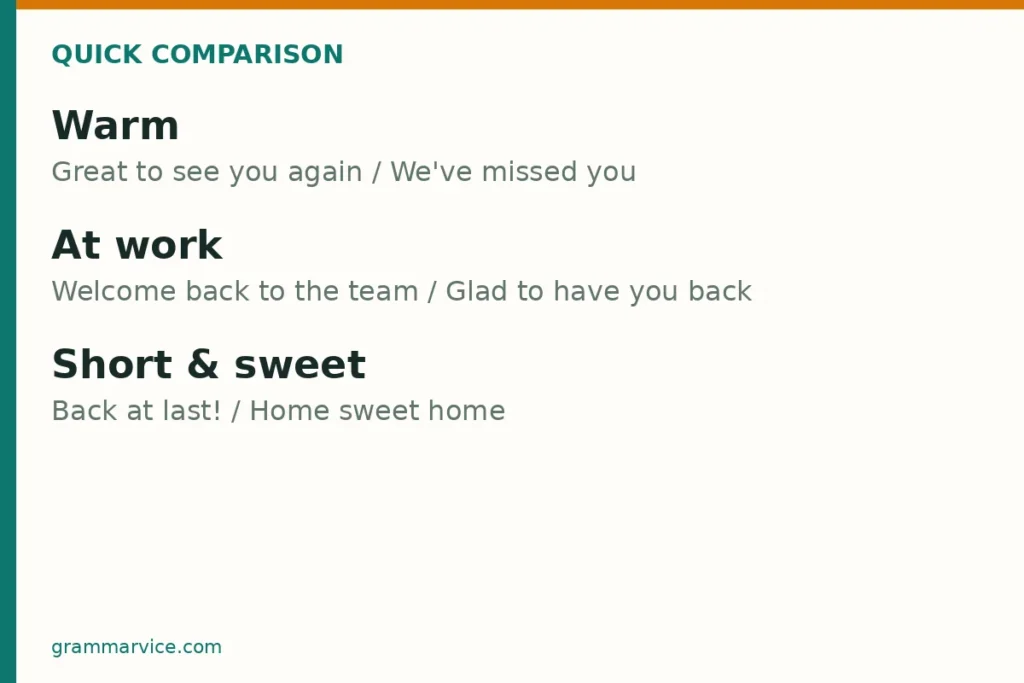
- It’s good to pick up where we left off. Best for returning coworkers and ongoing projects.
- Thank you for rejoining us. Best for professional workplace communication.
- Let’s get you settled back in. Best for helping someone adjust after an extended absence.
- We saved your place. Best for heartfelt messages to friends and family.
- Let’s make up for lost time. Best for close friends and loved ones.
- Look who’s back! Best for casual, cheerful greetings.
- The coffee machine is ready for its usual sidekick! Best for humorous workplace greetings.
- Here’s to a strong start to the new term! Best for welcoming students back to school.
Professional and Back-to-Work Alternatives to “Welcome Back”
When someone returns to the workplace, a thoughtful greeting can help them feel included and supported. The best professional alternatives acknowledge their return without making assumptions about their time away or expecting them to catch up immediately.
These expressions work in emails, team meetings, employee announcements, office conversations, and messages from managers. They are particularly useful when learning how to welcome someone back to work after vacation, personal leave, or another extended absence.
1. Thank You for Rejoining Us
Tone and use: Professional, appreciative, and respectful. This is an excellent choice for an employee returning to a team, department, or organization. It acknowledges their return without being overly emotional.
Example: “Thank you for rejoining us, Elena. We’re looking forward to working with you on our upcoming projects.”
2. It’s Good to Pick Up Where We Left Off
Tone and use: Collaborative and friendly. Use this expression when someone returns to an ongoing project, partnership, or professional conversation. It communicates continuity rather than focusing on their absence.
Example: “It’s good to pick up where we left off, Michael. We have some exciting updates to discuss.”
3. I Hope Your Time Away Went Well
Tone and use: Considerate, neutral, and professional. This greeting is especially suitable when you don’t know the details of someone’s absence. It shows interest without demanding an explanation.
Example: “I hope your time away went well, Sarah. Let me know when you’d like to catch up on the latest developments.”
4. We’re Ready to Get Back to Work Together
Tone and use: Positive, direct, and team-oriented. This phrase is appropriate for coworkers returning to a shared responsibility or project. It emphasizes cooperation and future progress.
Example: “We’re ready to get back to work together, James, and I’m excited about what our team can accomplish this quarter.”
5. Let’s Get You Settled Back In
Tone and use: Supportive and welcoming. This is particularly useful when someone has been away for several weeks or months and needs time to become familiar with workplace updates, schedules, and responsibilities.
Example: “Let’s get you settled back in, Amanda. I’ll walk you through the recent changes before we discuss your priorities.”
6. Your Perspective Will Help Us Move Forward
Tone and use: Appreciative and encouraging. Choose this when the returning person brings valuable experience, knowledge, or expertise to the team. It recognizes their contribution without overwhelming them with expectations.
Example: “Your perspective will help us move forward with this initiative, and we’re looking forward to hearing your thoughts.”
7. It’s a Pleasure to Resume Our Collaboration
Tone and use: Formal, polished, and respectful. This is a strong welcome back synonym formal enough for business correspondence, professional partnerships, and communications with clients or senior colleagues.
Example: “It’s a pleasure to resume our collaboration, David. I look forward to continuing our work on the upcoming campaign.”
8. We’re Pleased to Have You Participating Again
Tone and use: Formal and inclusive. This greeting works well for returning committee members, volunteers, students, and employees who are resuming their participation in a group or organization.
Example: “We’re pleased to have you participating again, Rachel, and appreciate your continued contribution to the committee.”
9. I’m Looking Forward to Working Alongside You
Tone and use: Warm, professional, and encouraging. Use this expression when you want to emphasize teamwork and make a returning colleague feel that their contribution matters.
Example: “I’m looking forward to working alongside you, Chris, as we begin the next phase of the project.”
10. Let’s Get Back Into Our Rhythm
Tone and use: Relaxed, collaborative, and slightly informal. This expression is suitable for established teams that already have a comfortable working relationship. It suggests returning to familiar routines without creating unnecessary pressure.
Example: “Let’s get back into our rhythm, everyone. We’ll start with a quick update and take things from there.”
Warm and Heartfelt Alternatives
Sometimes, a simple professional greeting isn’t enough. When someone returns to your family, friendship circle, or community after a long absence, you may want to express affection and genuine happiness.
These warm alternatives are suitable for greeting loved ones, writing cards, sending personal texts, and welcoming someone who has been away for a meaningful period.
11. We Saved Your Place
Tone and use: Affectionate, reassuring, and welcoming. This short expression communicates that the person still belongs and that their absence hasn’t changed their place in your life or group.
Example: “We saved your place at the dinner table, and we’re so happy you could join us tonight.”
12. The House Feels Like Home Again
Tone and use: Deeply affectionate and personal. Use this expression when a family member, partner, or close friend returns home after spending time away.
Example: “The house feels like home again now that you’re here, and I can’t wait to spend time together.”
13. It’s Lovely to Be Under One Roof Again
Tone and use: Heartfelt and nostalgic. This phrase is especially appropriate for family gatherings, reunions, and occasions when people who live far apart finally come together.
Example: “It’s lovely to be under one roof again for the holidays after so many months apart.”
14. Your Place in This Family Never Changed
Tone and use: Reassuring, emotional, and sincere. This expression is meaningful when welcoming someone after a difficult period, a long separation, or a major life change.
Example: “Your place in this family never changed, and we’re grateful to have you spending time with us again.”
15. Let’s Make Up for Lost Time
Tone and use: Warm, enthusiastic, and conversational. This is a natural choice for close friends or relatives who haven’t spent time together recently. It suggests catching up and making new memories.
Example: “Let’s make up for lost time with dinner this weekend; I have so much to tell you.”
16. This Reunion Has Been a Long Time Coming
Tone and use: Emotional, nostalgic, and celebratory. Use this expression when greeting someone after a lengthy separation or when several people are finally getting together.
Example: “This reunion has been a long time coming, and I’m so happy we could finally make it happen.”
17. The Door Has Always Been Open for You
Tone and use: Compassionate, reassuring, and welcoming. This phrase communicates unconditional acceptance and is especially meaningful when someone is returning after a challenging or uncertain period.
Example: “The door has always been open for you, and there’s always a place for you here.”
18. You Bring Something Special to This Circle
Tone and use: Appreciative, personal, and uplifting. This greeting works well for friends, family members, and community groups when you want to recognize the unique personality someone brings.
Example: “You bring something special to this circle, and our gatherings are better when everyone is together.”
19. Let’s Make Some New Memories From Here
Tone and use: Optimistic, encouraging, and forward-looking. This expression is useful when someone returns after a major life change or an extended period away. It focuses on future experiences rather than past circumstances.
Example: “Let’s make some new memories from here, starting with a weekend trip together.”
20. Our Little Corner Feels Brighter Today
Tone and use: Gentle, affectionate, and slightly poetic. This phrase is suitable for a close-knit family, friendship group, or community where the person’s presence makes a noticeable difference.
Example: “Our little corner feels brighter today, and we’re looking forward to spending more time together.”
Casual and Funny Ways to Say “Welcome Back”
Funny ways to say welcome back can make a reunion more entertaining, especially when greeting close friends or coworkers who enjoy humor. A playful expression can break the ice and make an ordinary return feel like a celebration.
However, humor depends on your relationship with the person. Keep jokes lighthearted and avoid making fun of someone’s absence, personal circumstances, or reason for taking leave.
21. Look Who’s Back!
Tone and use: Playful, energetic, and familiar. This is an easy greeting for friends, classmates, and coworkers you know well. It works especially well when someone unexpectedly walks into a room.
Example: “Look who’s back! We were wondering when you’d finally make an appearance.”
22. The Legend Returns!
Tone and use: Dramatic, humorous, and enthusiastic. Use this exaggerated greeting for a friend or teammate who enjoys being the center of a little friendly celebration.
Example: “The legend returns! Someone clear the schedule because we’ve got catching up to do.”
23. Back in the Building!
Tone and use: Energetic, informal, and upbeat. This is a fun expression for an employee, classmate, or friend returning to a familiar place after an absence.
Example: “Back in the building! The office coffee breaks can finally return to normal.”
24. The Snack Drawer Is Officially Under New Management
Tone and use: Silly, workplace-friendly, and conversational. This greeting is ideal for a coworker who has a reputation for sharing snacks or organizing office treats.
Example: “The snack drawer is officially under new management now that you’re back!”
25. Your Chair Has Been Keeping Your Spot Warm
Tone and use: Lighthearted and friendly. This expression is particularly suitable for office colleagues returning after vacation or a short break. It adds humor without making the person feel uncomfortable.
Example: “Your chair has been keeping your spot warm, and your desk is ready for its favorite owner.”
26. The Sequel Starts Now!
Tone and use: Creative, playful, and enthusiastic. This phrase works well for friends, group activities, or coworkers returning to a familiar team after an extended break.
Example: “The sequel starts now! Let’s make this chapter even better than the last one.”
27. The Coffee Machine Is Ready for Its Usual Sidekick!
Tone and use: Funny, relaxed, and appropriate for friendly office environments. Use it when the returning coworker is known for regular coffee breaks or morning conversations.
Example: “The coffee machine is ready for its usual sidekick, so I’ll see you in the break room!”
28. The Group Chat Has Been Waiting for This
Tone and use: Modern, casual, and humorous. This expression is particularly suitable for friends or younger coworkers who regularly communicate through group chats.
Example: “The group chat has been waiting for this, so prepare yourself for approximately 200 unread messages!”
“Welcome Back” for Every Situation: Vacation, Sick Leave, Maternity Leave and Back to School
The best greeting often depends on why someone was away. A person returning from vacation may appreciate a cheerful question about their trip, while someone returning after illness or maternity leave may prefer a considerate message that gives them room to settle in.
29. Hope You Brought Back a Little Sunshine!
Tone and use: Cheerful, relaxed, and friendly. This is a lovely alternative for someone returning from vacation, especially if they have been away enjoying a sunny destination or relaxing holiday.
Example: “Hope you brought back a little sunshine! We’d love to hear about your trip whenever you’re ready to share.”
30. Take Today at Your Own Pace
Tone and use: Gentle, considerate, and supportive. This is particularly appropriate for someone returning after sick leave. It communicates that their well-being matters more than immediately catching up on every task.
Example: “Take today at your own pace, Mark. We’re happy to help you get settled and work through the updates.”
31. We’ll Make the Transition Back Manageable
Tone and use: Supportive, reassuring, and professional. This expression is especially useful when welcoming someone back to work after maternity leave. It communicates practical support without making assumptions about their personal experience or responsibilities.
Example: “We’ll make the transition back manageable, Priya, and help you get familiar with the team’s latest updates.”
32. Here’s to a Strong Start to the New Term!
Tone and use: Encouraging, cheerful, and educational. This is a suitable alternative for welcoming students, teachers, and school staff at the beginning of a new semester or academic year.
Example: “Here’s to a strong start to the new term! We have plenty of exciting opportunities to learn and grow together.”
How to welcome someone back from vacation: Keep your message positive and relaxed. You might say that you hope they enjoyed their time away, ask whether they would like to share anything about their trip, and give them time to catch up on work. Avoid immediately overwhelming them with unfinished tasks.
If you’re also preparing a message before someone’s next holiday, our collection of other ways to say enjoy yourself offers additional expressions for wishing someone a pleasant experience.
How to welcome someone back after sick leave: Choose a compassionate greeting that doesn’t require the person to explain their health. “Take today at your own pace” or “We’re here if you need anything” can make the return feel more comfortable. Let them decide whether they want to discuss their absence.
How to welcome someone back to work after maternity leave: Make the message inclusive, supportive, and practical. Acknowledge their return, share relevant workplace updates, and offer a manageable plan for catching up. Avoid assumptions about their feelings, childcare arrangements, or willingness to discuss personal matters.
Other ways to say welcome back to school: Teachers, students, and school administrators can use expressions such as “Here’s to a strong start to the new term!” or “A new chapter of learning begins today!” A good school greeting should create excitement while helping everyone feel included.
Which One Should You Use? A Quick Guide
Choosing between different welcome back synonyms becomes easier when you consider the setting and your relationship with the returning person. Use this guide to find an appropriate expression without overthinking your message.
| Situation | Best phrase | Why it works |
|---|---|---|
| Employee returning to work | Thank you for rejoining us. | Professional and appreciative. |
| Ongoing team project | It’s good to pick up where we left off. | Emphasizes collaboration and continuity. |
| Employee returning after extended leave | Let’s get you settled back in. | Offers practical support. |
| Friend returning home | We saved your place. | Communicates affection and belonging. |
| Close friend returning after months away | Let’s make up for lost time. | Encourages reconnecting. |
| Casual coworker greeting | Look who’s back! | Cheerful and conversational. |
| Funny office greeting | The coffee machine is ready for its usual sidekick! | Adds workplace humor. |
| Vacation return | Hope you brought back a little sunshine! | Creates a friendly conversation. |
| Sick leave return | Take today at your own pace. | Shows consideration and empathy. |
| Maternity leave return | We’ll make the transition back manageable. | Emphasizes support and flexibility. |
| Back to school | Here’s to a strong start to the new term! | Encourages a positive beginning. |
When in doubt, choose a simple, respectful expression that matches the person’s circumstances. You don’t need an elaborate greeting to make someone feel appreciated. A thoughtful sentence delivered sincerely is usually more effective than an overly creative phrase.
Example: A Welcome-Back Team Email and Card Lines
If you’re welcoming an employee or colleague back to work, a short team email can make the person’s return feel organized and inclusive. It also gives everyone an opportunity to express appreciation without overwhelming the returning employee with individual messages.
Here is a copy-ready example you can adapt for your workplace.
Subject: Welcome Back to the Team, Jordan!
Hi Team,
Please join me in welcoming Jordan back to the team! We’re pleased to have Jordan rejoining us and look forward to continuing our work together.
While Jordan has been away, a few things have changed, so we’ll make sure to share the latest updates, project developments, and upcoming priorities. We’ll also provide the support and information needed to make the transition back as smooth as possible.
Please take a moment to say hello and help make Jordan’s return a positive experience. There’s no need to cover everything at once; we’ll work through the updates together.
Welcome back, Jordan! It’s good to pick up where we left off, and we’re looking forward to what’s ahead.
Best regards,
Alex
Team Manager
For personal cards, handwritten notes, and text messages, you can use these shorter messages tailored to different situations.
Welcome-Back Card and Text Lines After Vacation
- “Welcome back! I hope your vacation was full of wonderful moments and plenty of relaxation.”
- “Hope you had an amazing trip. Let’s catch up soon and hear all about your adventures!”
- “The vacation may be over, but the memories are yours to keep. Happy to have you around again!”
Welcome-Back Card and Text Lines After Sick Leave
- “Thinking of you as you settle back in. Take the time you need, and remember that we’re here to support you.”
- “It’s good to have you with us. Wishing you continued strength and an easy transition back.”
- “Sending warm wishes as you return. There’s no rush to catch up on everything at once.”
Welcome-Back Card and Text Lines After Maternity Leave
- “Welcome back! We’re happy to support you as you settle into your routine again.”
- “Wishing you a smooth return and plenty of support as you balance your new routine with work.”
- “It’s wonderful to have you rejoining the team. We’ll help make the transition as comfortable as possible.”
Welcome-Back Card and Text Lines for School
- “Welcome back to school! Here’s to new friendships, exciting discoveries, and a fantastic year ahead.”
- “A new semester means new opportunities. We’re excited to learn and grow together!”
- “Your next chapter starts today. Wishing you a wonderful school year filled with success and memorable experiences.”
For all these messages, personalization makes a difference. Include the person’s name, mention a shared project or experience when appropriate, and choose words that reflect your actual relationship. A short, genuine message is often more memorable than a lengthy greeting filled with generic compliments.
Mistakes to Avoid When Welcoming Someone Back
A welcome-back message should make someone feel comfortable, appreciated, and included. Even a well-intentioned greeting can have the wrong effect if it ignores the person’s circumstances. Keep these common mistakes in mind.
- Making over-familiar jokes after a serious illness: Someone returning after a medical absence may not appreciate jokes about being away, missing work, or being sick. Choose a considerate greeting such as “Take today at your own pace” instead.
- Assuming someone enjoyed their time away: Not every absence is a vacation. Avoid automatically saying “Hope you had a wonderful break” when you don’t know why the person was away. A neutral expression is safer.
- Ignoring the circumstances of a rehire: Saying “Welcome back” to someone who was previously fired and rehired may feel awkward, especially if the departure was difficult. Consider the person’s comfort and workplace context before drawing attention to their return. A simple “It’s good to be working together” may be more appropriate.
- Forgetting the person’s name or context: A generic greeting can feel impersonal, particularly after an extended absence. Use the person’s name when appropriate and recognize the situation accurately.
- Asking uncomfortable personal questions: Avoid immediately asking someone to explain a medical absence, family situation, or personal leave. Let them decide what they want to share.
- Overloading someone with responsibilities: A welcome-back greeting should not become a list of unfinished tasks. Allow the person time to review updates and understand their current priorities.
- Using humor with the wrong audience: Funny expressions may work between close friends but can sound disrespectful in a formal email or when addressing a senior colleague, client, or employee returning after a difficult experience.
The goal is to acknowledge someone’s return while respecting their boundaries. When you’re unsure which expression to use, choose warmth, simplicity, and consideration.
If you came here wondering what’s another way to say welcome back, the short answer is that it depends on the setting: the lists above collect the strongest other ways to say welcome back to work, to school and to home, grouped by tone so you can pick in seconds. And if the greeting is aimed at you, the final question below covers how to reply to welcome back messages gracefully, whether they arrive in an email, a card or a quick text.
Frequently Asked Questions
What’s the best professional way to say “welcome back” to an employee?
“Thank you for rejoining us” and “Let’s get you settled back in” are excellent professional alternatives. They communicate appreciation while making the employee feel supported. You can also say, “It’s good to pick up where we left off,” especially when welcoming someone back to an ongoing project or established team.
What should I write in a welcome back message after maternity leave or sick leave?
Choose a warm, supportive message that respects the person’s privacy. For maternity leave, try “We’re happy to support you as you settle into your routine again.” After sick leave, consider “Take the time you need to get comfortable.” Avoid asking personal questions or assuming the person is completely recovered or ready for a full workload.
Can I say “welcome back” in a formal email, or is it too casual?
Yes, “welcome back” is appropriate in a formal email. It is polite, professional, and widely understood. If you want a more polished alternative, use “Thank you for rejoining us,” “It’s a pleasure to resume our collaboration,” or “We’re pleased to have you participating again.” Choose the wording that best matches your relationship with the recipient.
What’s a funny way to say “welcome back” to a coworker?
“The legend returns!” and “The coffee machine is ready for its usual sidekick!” are playful options for coworkers with whom you share a friendly relationship. You could also say “Back in the building!” Keep the humor light and avoid jokes about serious illness, personal leave, or circumstances the person may not want to discuss.
What’s the difference between “welcome back” and “welcome home”?
“Welcome back” is a general greeting for someone returning to any familiar place, group, activity, or situation. “Welcome home” is more personal and usually refers to someone’s return to their home or a place where they feel a strong sense of belonging. For example, use “Welcome back” for a returning employee and “Welcome home” for a family member returning from a trip.
How do you reply when someone says “welcome back” to you?
You can respond with “Thank you! It’s good to be back,” “Thanks for the warm welcome,” or “I appreciate it; I’m happy to be here.” In a professional setting, “Thank you. I’m looking forward to getting back into the routine” is appropriate. For more expressions related to responding to appreciation, explore our guide to other ways to say you’re welcome.
Conclusion
Choosing other ways to say welcome back helps you make your greetings more thoughtful, natural, and appropriate for different relationships and situations. Whether you’re welcoming an employee after leave, a friend returning from vacation, a family member coming home, or students starting a new term, the right expression can make their return feel meaningful.
For professional settings, try “Thank you for rejoining us” or “Let’s get you settled back in.” For personal relationships, “We saved your place” and “Let’s make up for lost time” add warmth. Whatever phrase you choose, keep your message genuine, considerate, and suited to the person receiving it.