25 Other Ways to Say “I Can’t Believe It” (With Examples)
Quick Answer: If you want other ways to say “I can’t believe it,” you can use expressions such as “That’s incredible,” “I’m speechless,” “No way,” “I’m completely stunned,” or “That’s hard to imagine.” The best alternative depends on whether you are expressing happiness, surprise, shock, skepticism, or sympathy. Some phrases work well with friends, while others sound more appropriate in professional conversations.
Sometimes, “I can’t believe it” just doesn’t capture how surprised you feel. Maybe a friend has shared wonderful news, a colleague has announced an unexpected achievement, or someone has told you something so shocking that you need a moment to process it. Finding the right words can make your reaction sound more genuine and meaningful.
Learning other ways to say i can’t believe it can also help you avoid repeating the same expression in conversations, emails, text messages, and everyday writing. Whether you need other ways to say I can’t believe this, another way to say I can’t believe, or another way to say can you believe it, there are plenty of natural alternatives.
Below, you’ll find 32 different expressions, organized by tone and situation. Each phrase includes a short explanation and a practical example so you can choose the right words for good news, unexpected surprises, funny conversations, professional situations, and difficult moments.
Top 10 Quick Picks: Other Ways to Say I Can’t Believe It
If you need a quick alternative without reading through every expression, these ten phrases are excellent starting points. They cover different emotions and work in a variety of everyday situations.
- That’s incredible! – Best for expressing excitement or admiration.
- I’m speechless! – Ideal when something leaves you without words.
- No way! – A casual reaction to surprising information.
- I’m completely stunned. – Perfect for an unexpected or shocking event.
- That’s hard to wrap my head around. – Useful when something seems difficult to understand.
- You’re kidding me! – A playful response to surprising news.
- I find that hard to believe. – A more formal way to express skepticism.
- That’s quite unexpected. – Suitable for polite and professional conversations.
- That’s a lot to take in. – A thoughtful response to overwhelming news.
- I never saw that coming. – A natural reaction to an unexpected development.
These expressions aren’t interchangeable in every situation. For example, “That’s incredible!” usually communicates admiration, while “I find that hard to believe” can suggest that you doubt someone’s statement. Understanding these differences will help you sound more natural.
What Does “I Can’t Believe It” Mean?
“I can’t believe it” is an expression people use when something seems extremely surprising, unexpected, shocking, or difficult to accept as true. It communicates disbelief or amazement when an event happens differently from what someone expected.
The phrase can express several emotions depending on the situation:
- Happiness: You receive exciting news that seems almost too good to be true.
- Shock: Someone tells you something completely unexpected.
- Disappointment: Something unpleasant happens that you never anticipated.
- Confusion: You hear information that is difficult to understand or accept.
- Skepticism: You question whether someone’s statement is actually true.
For example, if your friend tells you they won a major award, you might say, “I can’t believe it! Congratulations!” However, if someone tells you an unbelievable story, the same expression might communicate doubt instead of happiness.
The adjective incredible is also closely related to this expression. According to the Cambridge Dictionary definition of incredible, it can describe something that is impossible or very difficult to believe. It can also describe something extremely good.
Understanding the emotion behind your reaction is the first step in choosing the right alternative. When considering how to express disbelief, think about whether you want to communicate excitement, genuine surprise, uncertainty, or concern.
Amazed and Delighted: Other Ways to Say “I Can’t Believe It” for Good News
When someone shares wonderful news, you usually want your response to communicate happiness, admiration, and excitement. These alternatives are particularly useful for celebrating achievements, personal milestones, unexpected opportunities, and positive surprises.
1. That’s Incredible!
Tone and usage: This enthusiastic expression communicates admiration when something is unusually impressive or exciting. Use it when someone achieves something meaningful or shares wonderful news. It sounds natural in conversations with friends, family members, and coworkers.
Example: That’s incredible! I heard you got accepted into your dream university.
2. I’m Amazed by What You’ve Done.
Tone and usage: This phrase expresses genuine admiration for someone’s actions, abilities, or achievements. Unlike a general expression of surprise, it specifically recognizes another person’s effort. It works particularly well when congratulating someone on a significant accomplishment.
Example: I’m amazed by what you’ve done with the business in just two years.
3. What an Extraordinary Surprise!
Tone and usage: This expression communicates excitement when something wonderful happens unexpectedly. It sounds slightly more polished than everyday reactions and works well when describing celebrations, thoughtful gestures, and unexpected opportunities.
Example: What an extraordinary surprise! I never expected everyone to organize a celebration for me.
4. This Is Beyond Anything I Imagined.
Tone and usage: Use this phrase when an experience or achievement exceeds your expectations. It communicates deep appreciation and amazement, making it suitable for emotional moments, personal milestones, and meaningful accomplishments.
Example: This is beyond anything I imagined; I never thought our project would receive this much recognition.
5. I Never Dreamed This Would Happen.
Tone and usage: This heartfelt expression is appropriate when something wonderful happens that you previously considered unlikely. It works especially well for long-awaited achievements, unexpected opportunities, and important personal milestones.
Example: I never dreamed this would happen, but I’ve finally published my first book.
6. I’m Genuinely Impressed.
Tone and usage: This is a confident and slightly restrained alternative that communicates admiration without sounding overly emotional. It works well in professional environments, academic discussions, and conversations where you want to acknowledge someone’s achievement respectfully.
Example: I’m genuinely impressed by how quickly your team completed the entire project.
Shocked and Stunned: When the Surprise Stops You in Your Tracks
Some situations are so unexpected that an ordinary expression of surprise doesn’t feel strong enough. Whether you hear shocking news, discover an unexpected truth, or experience something extraordinary, these alternatives communicate a stronger emotional reaction.
7. I’m Speechless.
Tone and usage: This expression means you are so surprised, overwhelmed, or emotionally affected that you cannot immediately find the right words. It works for both wonderful and shocking situations, especially when a simple reaction doesn’t communicate the depth of your feelings.
Example: I’m speechless after hearing that you’ve been selected for the international competition.
8. No Way!
Tone and usage: “No way!” is a short, informal expression of disbelief. It is particularly common in friendly conversations when someone shares unexpected information. Depending on your tone, it can communicate excitement, shock, or playful skepticism.
Example: No way! You actually met your favorite actor at the airport?
9. This Caught Me Completely Off Guard.
Tone and usage: Use this expression when something happens without warning and you weren’t emotionally or mentally prepared for it. It sounds more descriptive than a simple exclamation and works in personal and professional conversations.
Example: Your announcement caught me completely off guard because I had no idea you were leaving the company.
10. I Did Not See That Coming.
Tone and usage: This natural expression communicates that an event was completely unexpected. It is particularly useful when reacting to surprising decisions, unexpected outcomes, plot twists, or sudden changes in someone’s plans.
Example: I did not see that coming; I thought our team was going to win the championship.
11. I’m Having Trouble Processing This.
Tone and usage: This phrase communicates that information is so surprising or overwhelming that you need time to understand it. It sounds thoughtful and sincere, making it suitable for emotionally significant conversations rather than lighthearted reactions.
Example: I’m having trouble processing this because I never expected such a big announcement today.
12. That’s Hard to Wrap My Head Around.
Tone and usage: This conversational idiom expresses difficulty understanding something because it seems unusually complicated, surprising, or extraordinary. Use it when you need more time to comprehend an unexpected situation or unfamiliar information.
Example: That’s hard to wrap my head around; I can’t imagine how they completed the entire project in one weekend.
Funny and Casual: For Friends, Chats and Texts
When talking to close friends, you don’t always need polished or formal language. Casual expressions can make your reactions sound more spontaneous, entertaining, and natural. These alternatives are particularly useful for social media comments, group chats, text messages, and everyday conversations.
13. You’re Kidding Me!
Tone and usage: This playful expression communicates surprise while suggesting that the information sounds almost too unusual to be true. Use it with friends when someone shares unexpected news or tells you an unbelievable story.
Example: You’re kidding me! You found your missing wallet after three months?
14. You’ve Got to Be Joking.
Tone and usage: This informal expression shows that something sounds extremely surprising or difficult to accept. It can be humorous among friends, although it may sound doubtful or slightly confrontational if used in a serious conversation.
Example: You’ve got to be joking; they canceled the concert just an hour before it started?
15. Get Out of Here!
Tone and usage: In casual American English, this expression can communicate playful disbelief rather than literally asking someone to leave. It is best used with people who understand your sense of humor and conversational style.
Example: Get out of here! You won two free tickets to the championship game?
16. Are You for Real?
Tone and usage: This relaxed expression asks whether surprising information is genuine. It works well in conversations with friends, especially when you want someone to confirm something that sounds unbelievable.
Example: Are you for real? You just got offered your dream job?
17. That’s Wild.
Tone and usage: This short, modern expression communicates amazement about something unusual, unexpected, or difficult to imagine. It is especially common in casual conversations and online chats, where a brief reaction is often enough.
Example: That’s wild! I can’t believe you ran into your childhood best friend in another country.
18. Stop, I Don’t Believe You.
Tone and usage: This playful reaction is useful when a friend shares surprising or entertaining information. It suggests that you are struggling to believe the story, but your delivery should make it clear that you’re joking rather than accusing the person of lying.
Example: Stop, I don’t believe you! You really won the entire trivia competition by yourself?
Polite and Professional: Safe Alternatives for Work
In workplace conversations, professional emails, meetings, and academic discussions, expressing disbelief requires a little more care. Some casual expressions can sound dismissive or disrespectful, particularly when responding to a colleague, manager, client, or business partner.
Choose language that communicates surprise without questioning someone’s honesty or making them feel uncomfortable. The following alternatives offer a more measured approach.
19. That’s Quite Unexpected.
Tone and usage: This polite expression acknowledges surprising information without sounding overly emotional. It works well during business meetings, professional discussions, and conversations involving unexpected changes or decisions.
Example: That’s quite unexpected; I wasn’t aware that the company was considering a change in management.
20. I Find That Hard to Believe.
Tone and usage: This is a formal way to express skepticism when information seems questionable or inconsistent with what you already know. However, it can sound confrontational if directed at someone personally, so use it carefully in professional conversations.
Example: I find that hard to believe, considering the financial figures presented in last month’s report.
21. That’s a Surprising Development.
Tone and usage: This professional expression is useful when responding to unexpected business news, project updates, policy changes, or organizational decisions. It acknowledges the information while maintaining a neutral and composed tone.
Example: That’s a surprising development, and we’ll need to review how it affects the current project timeline.
22. I Wouldn’t Have Anticipated That.
Tone and usage: This measured expression communicates that something happened outside your expectations. It is appropriate for workplace discussions, presentations, academic conversations, and situations where you want to sound thoughtful rather than overly surprised.
Example: I wouldn’t have anticipated that outcome, but the latest research certainly provides an interesting perspective.
23. That Is Not What I Expected.
Tone and usage: This straightforward expression communicates that the actual result differs from what you previously understood or anticipated. It is useful when discussing project results, unexpected feedback, or changes in plans without making an emotional accusation.
Example: That is not what I expected from the initial proposal, so I’d like to understand what changed.
24. I’m Surprised to Hear That.
Tone and usage: This polite and flexible alternative communicates genuine surprise without automatically suggesting disbelief. It is appropriate for professional emails, conversations with clients, and situations where you want to acknowledge unexpected information respectfully.
Example: I’m surprised to hear that the delivery has been postponed, but I appreciate you letting me know.
If you’re working on professional communication, choosing the right expression matters. For example, when someone needs to be included in an ongoing discussion, you can also learn other ways to say you’re adding someone to an email chain to make workplace messages sound clearer and more natural.
Serious Moments: Gentle Ways to React to Bad or Sad News
Not every surprising situation is positive. Sometimes, someone shares difficult news about a personal loss, unexpected setback, family emergency, or disappointing event. In these situations, an enthusiastic expression such as “That’s incredible!” would be inappropriate.
Instead, choose words that acknowledge the emotional weight of the situation. These alternatives allow you to express shock while showing empathy and giving the other person room to share their feelings.
25. I Don’t Know What to Say.
Tone and usage: This sincere expression communicates that something has affected you so deeply that you cannot immediately find an appropriate response. It works particularly well when someone shares upsetting or emotionally difficult news.
Example: I don’t know what to say after hearing what your family has been going through.
26. That’s a Lot to Take In.
Tone and usage: This gentle phrase acknowledges that information is emotionally overwhelming or difficult to process. It is useful when someone shares several unexpected developments or explains a difficult personal situation.
Example: That’s a lot to take in, and I can understand why you’ve been feeling overwhelmed.
27. I’m Struggling to Process This News.
Tone and usage: This expression honestly communicates emotional shock or confusion. It is appropriate for serious conversations when you need a little time to understand what has happened before responding thoughtfully.
Example: I’m struggling to process this news because I never imagined something like this could happen.
28. I Wish This Weren’t True.
Tone and usage: This compassionate expression communicates sadness and disbelief when something painful has happened. It is particularly appropriate for responding to unfortunate news, personal tragedies, or disappointing circumstances.
Example: I wish this weren’t true, and I’m truly sorry you’re having to deal with it.
When responding to difficult news, remember that the other person may need support more than an elaborate reaction. Sometimes, a simple expression followed by “I’m here if you need anything” communicates more care than a dramatic response.
Short and Sweet: One-Line Reactions for Texts and Captions
Sometimes, a short reaction is all you need. Text messages, social media comments, and captions often work better with brief expressions that communicate your feelings immediately. These alternatives are easy to remember and fit naturally into casual digital conversations.
29. Seriously?
Tone and usage: This one-word question expresses surprise and asks for confirmation at the same time. It works well in text conversations when someone shares unexpected information that you need to verify.
Example: Seriously? You got the promotion after only six months?
30. Wait, What?
Tone and usage: This quick reaction communicates immediate confusion or surprise. It is especially useful when someone shares information that changes your understanding of a situation or catches you completely off guard.
Example: Wait, what? You’re moving to California next month?
31. This Can’t Be Happening.
Tone and usage: This dramatic expression communicates strong disbelief, particularly when something unexpected or unpleasant occurs. It is suitable for informal conversations and emotional reactions, although it can sound overly dramatic in professional situations.
Example: This can’t be happening; our flight has been canceled for the second time today.
32. I Need a Moment to Take That In.
Tone and usage: This thoughtful expression communicates that you need some time to process surprising information. Unlike a dramatic exclamation, it sounds calm and considerate, making it useful in both personal and professional conversations.
Example: I need a moment to take that in; I wasn’t expecting such a wonderful announcement.
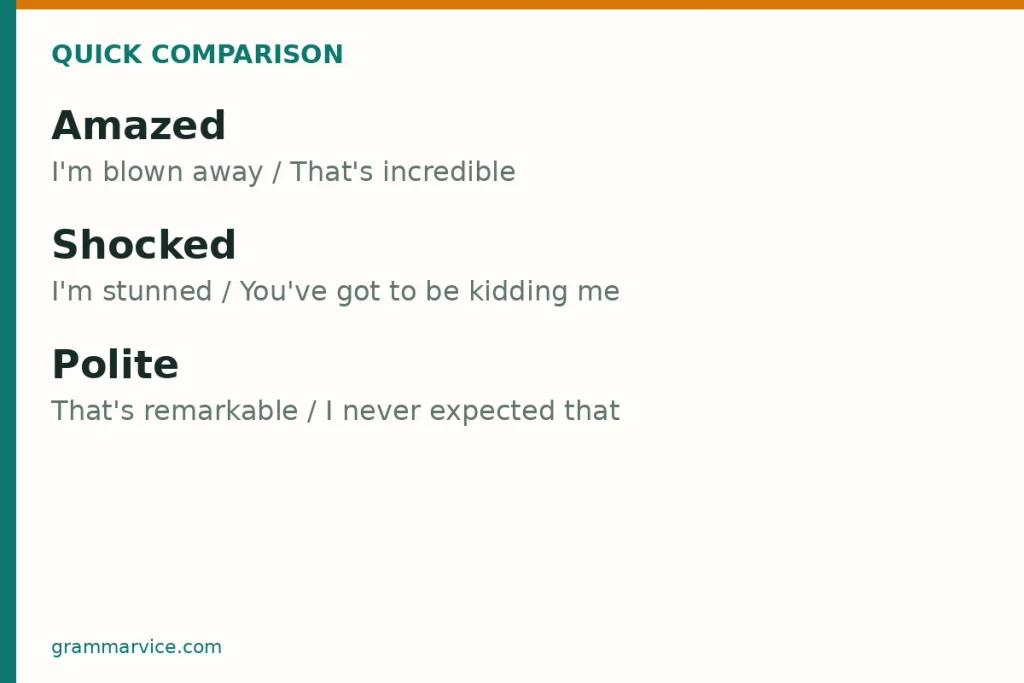
Which One Should You Use?
The best alternative depends on three things: the situation, your relationship with the other person, and the emotion you want to communicate. A phrase that sounds friendly in a text message might sound inappropriate in a business meeting.
Use this guide to choose an expression that matches your circumstances.
1. When someone shares good news: Choose positive expressions that communicate excitement and appreciation.
- That’s incredible!
- I’m amazed by what you’ve done.
- What an extraordinary surprise!
- I never dreamed this would happen.
2. When something completely shocks you: Choose stronger expressions that communicate immediate surprise.
- I’m speechless.
- This caught me completely off guard.
- I did not see that coming.
- That’s hard to wrap my head around.
3. When talking to friends: Use relaxed expressions that sound spontaneous and conversational.
- No way!
- You’re kidding me!
- Get out of here!
- That’s wild.
4. When communicating professionally: Choose neutral language that expresses surprise without sounding disrespectful or overly emotional.
- That’s quite unexpected.
- That’s a surprising development.
- I wouldn’t have anticipated that.
- I’m surprised to hear that.
5. When someone shares bad news: Focus on empathy instead of making your reaction the center of attention.
- I don’t know what to say.
- That’s a lot to take in.
- I’m struggling to process this news.
- I wish this weren’t true.
6. When sending a quick text: Keep your response short and natural.
- Seriously?
- Wait, what?
- No way!
- That’s wild!
Think about the impression you want to create before choosing an expression. If you want to sound supportive, choose a warm phrase. If you want to question information, choose a more measured expression. This small distinction can make your communication much clearer.
Phrases to Use With Care
Although many expressions communicate disbelief, some can create misunderstandings if you use them in the wrong situation. The words themselves may be grammatically correct, but their tone can make your response sound rude, sarcastic, or dismissive.
Here are a few expressions that deserve extra attention:
- “I find that hard to believe.” This can sound like you’re accusing someone of being dishonest. Use it when you genuinely need to question information, and consider asking for clarification instead.
- “You’ve got to be joking.” This is usually playful among friends, but it can sound disrespectful when responding to a manager, client, or someone sharing serious information.
- “Get out of here!” This expression is friendly in some casual American conversations, but people unfamiliar with its playful meaning might interpret it literally.
- “This can’t be happening.” This can sound dramatic or emotionally intense. Avoid it when a calm, supportive response would be more appropriate.
- “Are you for real?” Depending on your delivery, it can sound curious or confrontational. Use it with people who understand your conversational style.
Also, remember that expressing disbelief is different from telling someone you don’t care. If you want to communicate indifference rather than surprise, explore other ways to say I don’t care to understand which expressions better match that meaning.
A useful rule is to consider how the other person might interpret your words. When you’re uncertain, choose a neutral expression such as “That’s surprising” or “I’m surprised to hear that.” These phrases allow you to acknowledge unexpected information without creating unnecessary tension.

Frequently Asked Questions
What is the best way to say “I can’t believe it” professionally?
“That’s quite unexpected,” “I’m surprised to hear that,” and “That’s a surprising development” are excellent professional alternatives. They communicate surprise without sounding overly emotional or disrespectful. If you need to express skepticism, “I find that hard to believe” may work, but use it carefully because it can sound confrontational.
What are casual ways to say “I can’t believe it” to friends?
Casual alternatives include “No way!”, “You’re kidding me!”, “Are you for real?”, “That’s wild,” and “Get out of here!” These expressions sound natural in everyday conversations, group chats, and text messages. Choose one that matches your personality and the level of surprise you want to communicate.
How do you express disbelief without sounding rude?
Use calm, respectful expressions such as “That’s surprising,” “I wasn’t expecting that,” or “I’m having trouble understanding how that happened.” You can also ask a polite follow-up question instead of directly challenging someone’s statement. Your tone matters just as much as your choice of words.
What should I say instead of “I can’t believe it” for bad news?
When someone shares bad news, choose compassionate expressions such as “I don’t know what to say,” “That’s a lot to take in,” or “I wish this weren’t true.” These phrases acknowledge the seriousness of the situation without making your reaction sound insensitive. You can also add “I’m here for you” to show support.
Is “I can’t believe it”grammatically correct?
Yes, “I can’t believe it” is grammatically correct English. It uses the contraction “can’t,” meaning “cannot,” followed by the verb “believe” and the pronoun “it.” It is a natural expression in spoken and written English and can communicate surprise, amazement, shock, or disbelief depending on the context.
Can I use these alternatives in essays and formal writing?
Yes, but you should select alternatives that match the formality and purpose of your writing. Expressions such as “This is unexpected,” “The result is surprising,” and “This is difficult to accept” are generally more appropriate for academic essays and formal documents. Avoid slang expressions such as “No way!” and “That’s wild” in formal writing.
Conclusion
Finding the right expression can make your conversations more natural, engaging, and meaningful. Whether you’re celebrating good news, reacting to an unexpected event, responding to a shocking announcement, or expressing sympathy, there are plenty of alternatives to the familiar phrase “I can’t believe it.”
Use “That’s incredible!” or “I’m amazed” when expressing happiness, “No way!” when talking casually with friends, and “That’s quite unexpected” in professional conversations. For serious situations, choose gentler expressions such as “That’s a lot to take in.”
Ultimately, the best other ways to say I can’t believe it depend on your feelings and the person you’re speaking to. Choose an expression that genuinely reflects your reaction, and your words will sound more thoughtful, appropriate, and authentic.