25 Other Ways to Say “That Makes Sense” (With Examples)
Looking for other ways to say that makes sense without repeating the same expression in every conversation? You are not alone. It is a useful phrase, but it quickly becomes repetitive at work, in emails, and in everyday chats.
This guide gives you that makes sense alternatives for understanding, agreeing, and responding with empathy. You will find formal options for meetings and emails, casual options for friends, and thoughtful options for emotional conversations.
What Does “That Makes Sense” Mean?
That makes sense meaning is simple: the information is logical, clear, and easy to understand. It can also mean you accept the reasoning behind an idea, even if you do not fully agree with the conclusion.
For example, if a colleague explains why a deadline moved, you might say “that makes sense” to show you followed the logic. The phrase is often used as a short acknowledgement, especially in fast-moving conversations.
It is closely related to sense, which can mean understanding, judgement, or a feeling that something is reasonable.
Is “That Makes Sense” Professional or Polite?
Yes, “that makes sense” is usually professional and polite, especially in informal work conversations. It is not rude, dismissive, or unprofessional on its own.
However, tone and context matter. In a formal email or a serious meeting, it can sound a little casual. It can also sound flat if you repeat it too often or use it instead of a more specific response.
If you want to sound more polished, choose one of the formal ways to say that makes sense below. If you want to sound more supportive, choose an empathetic alternative.
Quick Top Picks: The 8 Best Alternatives at a Glance
If you need a fast answer, start with these eight options:
- I understand what you mean. — Best all-round alternative.
- That tracks. — Casual and confident.
- That aligns with what I was thinking. — Great for agreement at work.
- I see where you are coming from. — Warm and understanding.
- That is clear now. — Perfect after an explanation.
- I appreciate you explaining that. — Polite and grateful.
- That resonates with me. — Thoughtful and personal.
- That logic holds up. — Ideal for a reasoned argument.
Alternatives That Show You Understand
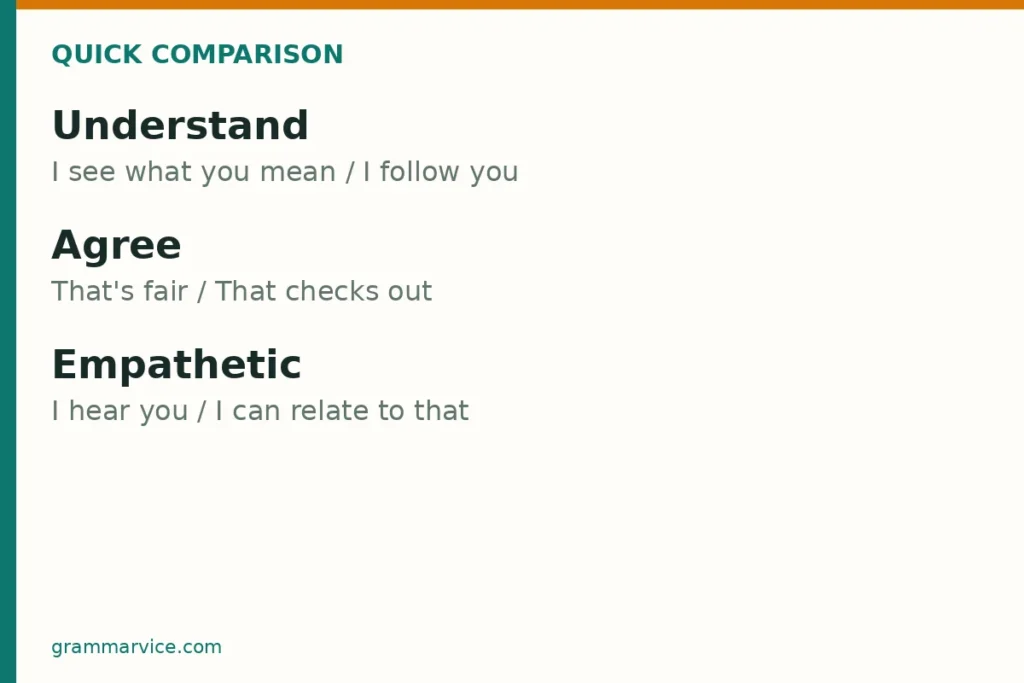
These alternatives focus on comprehension. Use them when someone has explained something and you want to confirm you followed it.
1. I understand what you mean.
Tone: Neutral and reliable. Example: “I understand what you mean — the delay happened because the supplier changed the delivery date.”
2. I follow you.
Tone: Casual and conversational. Example: “I follow you. We need to finish the report before the client call.”
3. I get it now.
Tone: Friendly and informal. Example: “I get it now. The new system saves time by removing the manual step.”
4. That is clear now.
Tone: Clear and professional. Example: “That is clear now. Thank you for walking me through the process.”
5. I see what you are saying.
Tone: Warm and attentive. Example: “I see what you are saying. The budget needs to cover both teams.”
6. That clicks for me.
Tone: Casual and natural. Example: “That clicks for me — the pieces finally fit together.”
7. I have got the picture.
Tone: Informal and confident. Example: “I have got the picture. We should focus on the launch first.”
8. That connects the dots for me.
Tone: Expressive and engaged. Example: “That connects the dots for me. Now I understand why sales dropped last month.”
Alternatives That Show You Agree
These options do more than confirm understanding. They show that you accept or support the idea.
9. I agree completely.
Tone: Direct and supportive. Example: “I agree completely. This approach is the safest option.”
10. That aligns with what I was thinking.
Tone: Professional and collaborative. Example: “That aligns with what I was thinking. We should prioritise customer feedback.”
11. You have a point.
Tone: Casual and honest. Example: “You have a point. Starting small will reduce the risk.”
12. I am with you on that.
Tone: Friendly and supportive. Example: “I am with you on that. The current plan needs more time.”
13. That sounds right to me.
Tone: Relaxed and agreeable. Example: “That sounds right to me. Let us go with the simpler design.”
14. I could not agree more.
Tone: Strong and enthusiastic. Example: “I could not agree more. Clear communication prevents most mistakes.”
15. That is a fair point.
Tone: Balanced and respectful. Example: “That is a fair point. We should consider the cost before deciding.”
16. You have convinced me.
Tone: Open and sincere. Example: “You have convinced me. The data supports your proposal.”
Logical and Work-Safe Alternatives for Meetings and Email
If you are looking for how to say that makes sense professionally, these options are safe for meetings, reports, and emails. They sound thoughtful without sounding stiff.
17. That is a logical conclusion.
Tone: Formal and analytical. Example: “That is a logical conclusion, given the results from last quarter.”
18. The reasoning is sound.
Tone: Formal and precise. Example: “The reasoning is sound, and the timeline is realistic.”
19. That checks out.
Tone: Professional but relaxed. Example: “That checks out. The numbers match the original forecast.”
20. That logic holds up.
Tone: Confident and analytical. Example: “That logic holds up, especially after reviewing the evidence.”
21. That is a reasonable approach.
Tone: Diplomatic and professional. Example: “That is a reasonable approach for a first version of the project.”
22. I can see the logic in that.
Tone: Thoughtful and measured. Example: “I can see the logic in that, even though it changes our original plan.”
23. That is consistent with the evidence.
Tone: Formal and evidence-based. Example: “That is consistent with the evidence we collected during testing.”
24. That seems like the right call.
Tone: Professional and supportive. Example: “That seems like the right call, given the time pressure.”
Empathetic Alternatives for Feelings, Not Logic
Sometimes “that makes sense” is not about logic at all. It is about feelings. These alternatives work better when someone is sharing a personal experience, a worry, or a frustration.
25. I see where you are coming from.
Tone: Warm and understanding. Example: “I see where you are coming from. It is hard to stay motivated when plans keep changing.”
26. That is completely understandable.
Tone: Reassuring and kind. Example: “That is completely understandable. Anyone would feel frustrated in that situation.”
27. I can imagine how that feels.
Tone: Empathetic and gentle. Example: “I can imagine how that feels. It is disappointing after so much effort.”
28. That resonates with me.
Tone: Personal and reflective. Example: “That resonates with me. I have felt the same way before a big presentation.”
29. Of course you feel that way.
Tone: Validating and supportive. Example: “Of course you feel that way. The feedback was unclear and sudden.”
30. I hear you.
Tone: Simple and sincere. Example: “I hear you. That was a lot to handle in one week.”
31. That tracks.
Tone: Casual and affirming. Example: “That tracks. After a long week, it is normal to feel drained.”
32. I appreciate you explaining that.
Tone: Polite and grateful. Example: “I appreciate you explaining that. It helps me understand your side better.”
For more options that focus on understanding rather than logic, see these other ways to say I understand. If you want to rephrase an idea rather than simply agree with it, try these other ways to say in other words.
“That Makes Sense” vs “I Understand”: What’s the Difference?
These phrases look similar, but they are not identical. “That makes sense” focuses on the idea itself. It means the logic is clear or reasonable. “I understand” focuses on you. It means you have received and processed the message.
For example, you can understand an explanation without agreeing that it is logical. You can also think an idea is logical without fully understanding every detail.
| Phrase | Main focus | Best use |
|---|---|---|
| That makes sense | The logic of the idea | When the reasoning is clear |
| I understand | Your comprehension | When you have followed the message |
Which One Should You Use? A Quick Guide
Choose your phrase based on the situation, not just the words.
- A boss’s email: Use “That is a logical conclusion” or “The reasoning is sound.” Both sound professional and specific.
- A team meeting: Use “That aligns with what I was thinking” or “I can see the logic in that.” They show engagement without dominating the discussion.
- A friend’s problem: Use “I see where you are coming from” or “That is completely understandable.” They show empathy, not just agreement.
- A debate: Use “That is a fair point” or “You have convinced me.” They acknowledge strong reasoning without sounding defensive.
Mistakes to Avoid
Even a good phrase can sound weak if it is overused or used in the wrong place.
- Repeating it in every reply: It starts to sound automatic. Rotate two or three alternatives instead.
- Using it to end a conversation: It can sound like you are not interested. Add a follow-up question or a next step.
- Using it for feelings without empathy: “That makes sense” can sound cold after bad news. Choose a warmer response instead.
- Using it when you do not understand: Do not pretend. Ask a clear follow-up question instead.
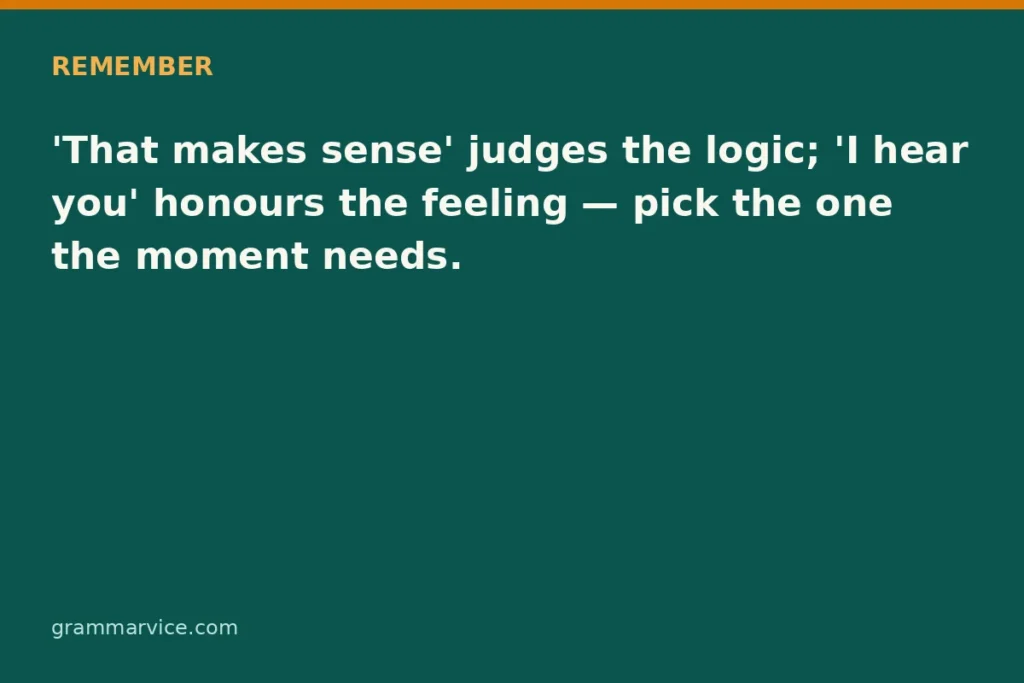
If you were searching for other ways to say makes sense in general, note that almost every makes sense synonym above also works as what to say instead of that makes sense in replies. When you need another way to say it makes sense in a thread you have already answered twice, rotate groups. Knowing how to say this makes sense formally — “the reasoning is sound” — also covers how to say that makes sense in an email to senior colleagues; it is the professional way to say makes sense without sounding casual. And makes sense, in other words, simply means the logic is visible — pick the phrase that shows which kind of sense you mean.
Frequently Asked Questions
What can I say instead of “that makes sense” at work?
At work, try “That is a logical conclusion,” “The reasoning is sound,” or “That aligns with what I was thinking.” These options sound professional and specific. They also show that you engaged with the idea, not just acknowledged it.
Is “that makes sense” professional?
Yes, it is generally professional in informal work conversations. However, it can sound casual in formal emails or serious meetings. In those situations, choose a more precise phrase such as “That is consistent with the evidence” or “I can see the logic in that.”
What is a formal way to say “that makes sense”?
A formal way to say “that makes sense” is “The reasoning is sound” or “That is a logical conclusion.” Both work well in emails, reports, and formal meetings. They focus on the logic rather than sounding conversational.
What’s the difference between “that makes sense” and “I understand”?
“That makes sense” means the idea is logical or reasonable. “I understand” means you have followed the message. You can understand something without agreeing with it, and you can think something is logical without understanding every detail.
How do I say “that makes sense” without sounding repetitive?
Rotate your responses based on the situation. Use “I understand what you mean” for comprehension, “That aligns with what I was thinking” for agreement, and “That is completely understandable” for empathy. Adding a short reason also makes your reply sound more natural.
What is the most empathetic alternative to “that makes sense”?
The most empathetic alternative is “I see where you are coming from” or “That is completely understandable.” Both validate the other person’s feelings. They work especially well when someone is sharing stress, frustration, or disappointment.
Conclusion
There are many other ways to say that makes sense, and the best choice depends on what you want to communicate. Use a logical phrase for work, an agreeable phrase for collaboration, and an empathetic phrase for feelings.
Next time you are tempted to write that makes sense for the fifth time in one thread, pause and choose the version that fits the moment. The right alternative does more than vary your vocabulary. It shows whether you understand, agree, or care — and it keeps the conversation moving.