25 Other Ways to Say “Enjoy Yourself” (With Examples)
Quick Answer: If you’re looking for other ways to say enjoy yourself, try “have a wonderful time,” “enjoy every moment,” “have a blast,” “make wonderful memories,” or “let your hair down.” For professional situations, use “I hope you have an enjoyable time” or “have a pleasant experience.” For vacations, try “have a wonderful trip” or “enjoy your getaway.”
“Enjoy yourself” is a friendly way to wish someone happiness, relaxation, or a memorable experience. However, using the same expression repeatedly can make your conversations, emails, and personal messages sound predictable. Choosing a more specific phrase can make your good wishes feel warmer, more thoughtful, and appropriate for the situation.
Whether someone is attending a birthday party, heading on vacation, celebrating an achievement, or taking a well-deserved break, there are plenty of ways to express your excitement for them. You can choose a playful expression for a close friend, a heartfelt message for someone you love, or a polished alternative for a professional email.
In this guide, you’ll discover 32 other ways to say enjoy yourself, organized by tone and context. Each expression includes a brief explanation and a natural example to help you decide what to say instead of enjoy yourself in everyday conversations, workplace communication, greeting cards, and special occasions.
What Does “Enjoy Yourself” Mean?
“Enjoy yourself” means to take pleasure in an activity, experience, or situation. It is a friendly expression used to encourage someone to have fun, feel happy, relax, or appreciate the time they spend doing something.
The phrase communicates positive feelings and goodwill. When you tell someone to enjoy themselves, you’re expressing a wish that they have a pleasant and satisfying experience.
For example:
- At a party: “Enjoy yourself at the party tonight!”
- Before a vacation: “You’ve been working hard, so enjoy yourself on your trip!”
- At a celebration: “Enjoy yourself at your graduation party. You’ve earned it!”
- During a break: “Take some time off and enjoy yourself this weekend.”
The expression can be used with friends, family members, coworkers, and acquaintances. Its meaning remains positive, although the most appropriate alternative depends on your relationship with the person and the occasion.
If you want to explore the dictionary meaning of the word, visit the Cambridge Dictionary definition of enjoy.
Is “Enjoy Yourself” Professional or Polite?
Yes, “enjoy yourself” is generally polite, friendly, and appropriate in professional settings. However, the expression can sound more casual than some alternatives, particularly when communicating with clients, senior colleagues, or business partners.
For example, telling a coworker “Enjoy yourself at the conference!” is perfectly acceptable. However, when writing to a client, “I hope you have an enjoyable experience at the conference” may sound more polished.
Here are some situations where different tones are appropriate:
- Professional emails: “I hope you have an enjoyable time at the event.”
- Workplace conversations: “Have a wonderful evening!”
- Friendly messages: “Have a blast!”
- Family conversations: “Make some wonderful memories!”
- Vacation wishes: “Have a fantastic trip!”
If you’re wondering how to say enjoy yourself professionally, choose a phrase that sounds respectful without becoming unnecessarily formal. Adding context, such as the event, trip, or occasion, also makes your message feel more personal.
Quick Top Picks: The 8 Best Alternatives at a Glance
Not sure which expression to choose? These eight alternatives are versatile options for different situations. Each one appears again in the detailed sections below, along with its meaning, tone, and an example.
- Enjoy every moment: A heartfelt wish for someone experiencing something special.
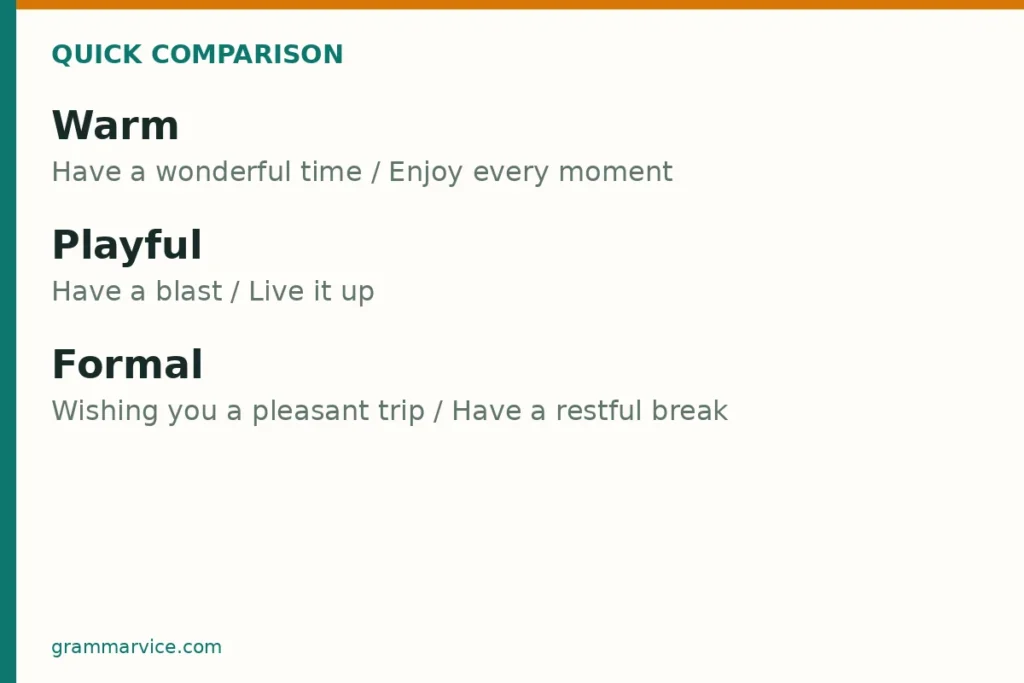
- Have a wonderful time: A warm, all-purpose expression for almost any occasion.
- Have a blast: A playful expression for parties, concerts, and exciting activities.
- Let your hair down: A casual way to encourage someone to relax and have fun.
- I hope you have an enjoyable time: A polished alternative for professional communication.
- Have a wonderful trip: A friendly expression for someone going on vacation.
- Take some time for yourself: A thoughtful message for someone who needs personal time.
- Unplug and recharge: An encouraging expression for someone taking a break from daily responsibilities.
These expressions cover several different meanings of enjoy yourself, from celebrating an exciting occasion to relaxing after a demanding week.
Warm and Heartfelt Ways to Say “Enjoy Yourself”
Sometimes, you want your message to communicate more than a simple wish for someone to have fun. When speaking to a close friend, family member, or loved one, a heartfelt expression can make your message more meaningful.
These alternatives are especially suitable for birthdays, weddings, celebrations, special achievements, and memorable experiences.
1. Enjoy Every Moment
Tone: Warm, thoughtful, and heartfelt.
“Enjoy every moment” encourages someone to appreciate the entire experience rather than focus only on the main event. It is particularly appropriate for special occasions, long-awaited trips, and important milestones.
Example: You’ve waited so long for this vacation, so enjoy every moment and make memories you’ll treasure forever.
2. Make Wonderful Memories
Tone: Sentimental, caring, and encouraging.
This expression focuses on creating meaningful experiences that someone can remember fondly. It is a lovely choice for weddings, family gatherings, vacations, and celebrations with friends.
Example: Have an amazing time at the family reunion and make wonderful memories with everyone.
3. Savor the Experience
Tone: Thoughtful, appreciative, and slightly sophisticated.
“Savor the experience” encourages someone to slow down and appreciate what they are doing. It works particularly well when someone has achieved an important milestone or is experiencing something they have anticipated for a long time.
Example: You’ve worked toward this achievement for years, so take a moment to savor the experience.
4. I Hope It Brings You Joy
Tone: Gentle, sincere, and emotionally warm.
This phrase expresses genuine happiness for someone and communicates that you hope their upcoming experience makes them feel fulfilled. It is especially suitable for meaningful occasions or activities that matter personally to them.
Example: I hope your new adventure brings you joy, confidence, and plenty of wonderful experiences.
5. Have a Wonderful Time
Tone: Friendly, positive, and versatile.
“Have a wonderful time” is one of the closest alternatives to “enjoy yourself.” It works in almost any situation, whether someone is attending a celebration, visiting friends, going on vacation, or enjoying a special evening.
Example: Have a wonderful time at your sister’s wedding, and congratulations to the happy couple!
6. Celebrate to Your Heart’s Content
Tone: Enthusiastic, affectionate, and celebratory.
This expression encourages someone to celebrate freely and enjoy a special occasion without holding back their happiness. It is best suited to birthdays, graduations, promotions, and other achievements.
Example: You’ve finally earned your degree, so celebrate to your heart’s content tonight!
7. Soak It All In
Tone: Warm, reflective, and encouraging.
“Soak it all in” encourages someone to appreciate the atmosphere, emotions, and details of an experience. It is especially useful for once-in-a-lifetime occasions, major accomplishments, and exciting personal milestones.
Example: It’s your graduation day, so soak it all in and enjoy every second of the celebration.
8. Wishing You a Day Filled With Happiness
Tone: Heartfelt, affectionate, and thoughtful.
This expression is a lovely way to communicate genuine good wishes. It works especially well in birthday cards, holiday messages, and personal notes when you want your words to feel more meaningful than a simple instruction to have fun.
Example: Wishing you a day filled with happiness, laughter, and all the things that make you smile.
Fun and Playful Ways to Say “Enjoy Yourself”
When you’re talking to friends, siblings, or people you know well, informal expressions can make your message sound more natural and energetic. These alternatives to enjoy yourself are ideal for parties, concerts, nights out, weekend activities, and exciting plans.
If you’re looking for other ways to say have fun without sounding repetitive, consider these playful options.
9. Have a Blast
Tone: Energetic, enthusiastic, and casual.
“Have a blast” means to enjoy yourself tremendously. It is a popular expression for exciting activities and social events where you expect someone to have a genuinely good time.
Example: Have a blast at the concert tonight, and don’t forget to send me some pictures!
10. Let Your Hair Down
Tone: Relaxed, friendly, and playful.
“Let your hair down” means to relax, stop worrying about everyday responsibilities, and enjoy yourself without being overly concerned about rules or expectations. It is particularly suitable for someone who has been working hard.
Example: You’ve been busy with work all month, so let your hair down and enjoy the party this weekend.
11. Live It Up
Tone: Exciting, upbeat, and informal.
“Live it up” encourages someone to enjoy a special opportunity or experience enthusiastically. It works particularly well for celebrations, vacations, milestone birthdays, and exciting nights out.
Example: You’re finally in New York for the weekend, so live it up and explore everything the city has to offer!
12. Have an Absolute Ball
Tone: Cheerful, playful, and expressive.
This expression means to have an exceptionally enjoyable time. It is a slightly more colorful alternative to “have fun” and works particularly well when someone is attending an exciting event or spending time with good friends.
Example: Have an absolute ball at the birthday celebration tonight!
13. Cut Loose
Tone: Informal, energetic, and carefree.
“Cut loose” encourages someone to stop being overly serious and enjoy themselves freely. It is particularly appropriate for dancing, parties, music festivals, and social gatherings.
Example: The weekend is finally here, so cut loose and enjoy a night away from your usual routine.
14. Paint the Town Red
Tone: Playful, adventurous, and lively.
This idiom describes going out and enjoying an exciting evening, usually involving entertainment, social activities, or celebrations. It is best used with friends who are planning a night out rather than someone attending a formal event.
Example: It’s your birthday, so gather your friends and paint the town red tonight!
15. Go All Out
Tone: Enthusiastic, motivating, and informal.
“Go all out” encourages someone to put their full energy into an enjoyable activity or celebration. It is especially suitable when the occasion calls for excitement and there is an opportunity to make it memorable.
Example: It’s your graduation party, so go all out and celebrate this incredible achievement!
Formal and Polite Ways to Say “Enjoy Yourself”
When communicating with clients, colleagues, managers, business partners, or professional acquaintances, you may prefer a more polished expression. Formal ways to say enjoy yourself should communicate warmth without sounding overly familiar or exaggerated.
These phrases are also useful when learning how to say enjoy yourself in an email, especially when writing to someone you do not know particularly well.
16. I Hope You Have an Enjoyable Time
Tone: Professional, courteous, and friendly.
This is one of the safest alternatives for workplace communication. It sounds polite without being excessively formal and is suitable for conferences, business events, professional gatherings, and planned activities.
Example: Thank you for confirming your attendance. I hope you have an enjoyable time at the annual conference.
17. Wishing You an Enjoyable Experience
Tone: Formal, thoughtful, and professional.
This expression is particularly appropriate when someone is about to participate in an organized activity, professional event, training program, or new experience. It communicates goodwill while maintaining a respectful tone.
Example: Wishing you an enjoyable experience during your upcoming professional development program.
18. Please Enjoy the Occasion
Tone: Courteous, polished, and welcoming.
“Please enjoy the occasion” is a suitable expression when addressing guests at an organized celebration, formal dinner, reception, or corporate event. It sounds especially natural when spoken by a host or event organizer.
Example: Thank you all for joining us this evening; please enjoy the occasion and make yourselves comfortable.
19. I Trust You’ll Find It Rewarding
Tone: Professional, considerate, and encouraging.
This phrase is useful when someone is participating in an activity that may be meaningful, educational, or professionally valuable. Rather than emphasizing entertainment, it expresses hope that the person gains satisfaction or value from the experience.
Example: I trust you’ll find the leadership workshop rewarding and gain valuable insights from the sessions.
20. May the Occasion Be Memorable
Tone: Elegant, formal, and sincere.
This expression is suitable for significant celebrations and special gatherings. It communicates a thoughtful wish that the event becomes a positive memory for the person attending.
Example: Congratulations on your retirement, and may the occasion be memorable for you and your family.
21. I Wish You a Delightful Evening
Tone: Polite, refined, and warm.
This is a graceful way to wish someone a pleasant evening without sounding overly casual. It works well in professional correspondence, formal invitations, and conversations with acquaintances.
Example: It was a pleasure meeting you today, and I wish you a delightful evening.
22. Have a Pleasant Experience
Tone: Neutral, respectful, and professional.
“Have a pleasant experience” is a straightforward expression that works in professional and customer-facing communication. It is particularly useful when someone is attending an event, visiting an organization, or participating in an activity.
Example: Thank you for choosing our services; we hope you have a pleasant experience during your visit.
Ways to Say “Enjoy Yourself” Before a Trip or Vacation
When someone is preparing for a vacation, weekend getaway, or exciting travel adventure, a simple “enjoy yourself” may not fully express your excitement for them.
In these situations, choose an expression that reflects the journey, exploration, relaxation, or experiences they are about to enjoy. If you’re wondering what to say instead of enjoy yourself on vacation, these alternatives are excellent choices.
23. Have a Wonderful Trip
Tone: Friendly, cheerful, and caring.
“Have a wonderful trip” is a classic expression for someone preparing to travel. It works for short weekend trips, family vacations, international travel, and business journeys.
Example: Have a wonderful trip to California! I hope you enjoy the beaches, restaurants, and beautiful scenery.
24. Safe Travels and Enjoy Your Time Away
Tone: Thoughtful, caring, and reassuring.
This expression combines a wish for someone’s safety with encouragement to enjoy their time away. It is particularly suitable for friends, family members, and coworkers who are traveling for an extended period.
Example: Safe travels and enjoy your time away; I hope you return with plenty of wonderful memories.
25. Enjoy Your Getaway
Tone: Relaxed, friendly, and casual.
“Enjoy your getaway” is a natural expression for someone taking a short vacation or weekend break. It communicates that you hope they have time to relax, explore, and temporarily step away from their normal routine.
Example: Enjoy your getaway this weekend, and don’t spend the entire time checking your work emails!
26. Take in the Sights
Tone: Encouraging, adventurous, and friendly.
This phrase is especially appropriate for someone visiting a new destination. It encourages them to explore the surroundings, appreciate local attractions, and experience what the destination has to offer.
Example: Have a great time in Chicago and take in the sights while you’re exploring downtown!
27. Have an Unforgettable Adventure
Tone: Exciting, enthusiastic, and adventurous.
This expression is ideal for someone planning an adventurous vacation, outdoor activity, international journey, or once-in-a-lifetime experience. It communicates excitement about the experiences they are about to discover.
Example: Have an unforgettable adventure during your backpacking trip through South America!
28. Make the Most of Your Time Away
Tone: Supportive, positive, and encouraging.
Use this expression when someone has limited vacation time or has been looking forward to a break. It encourages them to appreciate their time away and enjoy the activities they have planned.
Example: You’ve been looking forward to this holiday for months, so make the most of your time away and enjoy every opportunity.
Ways to Say “Enjoy Yourself” for Rest and Relaxation
Sometimes, someone doesn’t need excitement, parties, or adventures. They simply need time to relax, recover, and enjoy their own company.
If a friend has been working long hours or dealing with a stressful schedule, choose an expression that communicates care and encourages them to slow down.
29. Take Some Time for Yourself
Tone: Caring, supportive, and thoughtful.
This expression encourages someone to prioritize personal time and do something that makes them feel comfortable or happy. It is particularly appropriate for someone who has been busy with work, family responsibilities, or daily commitments.
Example: You’ve been taking care of everyone else lately, so take some time for yourself this weekend.
30. Unplug and Recharge
Tone: Relaxed, modern, and encouraging.
“Unplug and recharge” encourages someone to step away from technology, work notifications, and everyday distractions. It is a great choice when wishing someone a peaceful break from a demanding routine.
Example: Put your laptop away this weekend, unplug and recharge, and come back feeling refreshed.
31. Put Your Feet Up
Tone: Casual, comforting, and friendly.
This familiar expression means to sit back, relax, and stop worrying about responsibilities for a while. It is particularly suitable for someone who has been working hard or completing demanding tasks.
Example: You’ve finished the big project, so put your feet up and enjoy a peaceful evening.
32. Enjoy a Well-Deserved Break
Tone: Supportive, appreciative, and encouraging.
This phrase recognizes someone’s hard work while encouraging them to enjoy some time off. It is appropriate for coworkers, friends, family members, and anyone who has earned a little rest after a busy period.
Example: Congratulations on completing the project; enjoy a well-deserved break before starting your next assignment.
Example Messages: Cards, Texts and Farewell Emails
Knowing different expressions is helpful, but seeing how they fit into complete messages makes it easier to use them naturally. Here are three examples for common situations.
1. Professional Farewell Email
When a colleague is leaving for a conference, vacation, or professional event, keep your message polite and positive.
Example:
Hi Sarah,
Thank you for sharing the details of your upcoming trip. I hope you have an enjoyable time at the conference and find the sessions both interesting and rewarding. Safe travels, and I look forward to hearing about your experience when you return.
Best regards,
Michael
2. Birthday Card Message
For a birthday card, a heartfelt expression can make your wishes feel more personal and memorable.
Example:
Happy Birthday! Wishing you a day filled with happiness, laughter, and wonderful surprises. Celebrate to your heart’s content and make wonderful memories with the people you love. You deserve every bit of happiness!
3. Vacation Text Message
For a friend or family member going on vacation, a short and enthusiastic message is often enough.
Example:
Have a wonderful trip! Take in the sights, enjoy your getaway, and make the most of your time away. You’ve earned this break, so unplug and recharge. Can’t wait to hear all about it when you get back!
Which One Should You Use? A Quick Guide
The best enjoy yourself alternative depends on the situation, your relationship with the recipient, and the kind of experience you want to wish them. A phrase that sounds perfect between close friends might feel too informal in a business email.
Use this quick guide to choose the most appropriate expression:
- When a close friend is attending a party: Say “Have a blast” or “Let your hair down.”
- When someone is celebrating a birthday: Say “Celebrate to your heart’s content.”
- When someone achieves an important milestone: Say “Soak it all in” or “Savor the experience.”
- When a colleague attends a conference: Say “I hope you have an enjoyable time.”
- When welcoming guests to an event: Say “Please enjoy the occasion.”
- When a client attends a professional gathering: Say “Have a pleasant experience.”
- When someone is going on vacation: Say “Have a wonderful trip.”
- When a friend is taking a weekend break: Say “Enjoy your getaway.”
- When someone is visiting a new city: Say “Take in the sights.”
- When someone needs personal time: Say “Take some time for yourself.”
- When someone has been working too hard: Say “Enjoy a well-deserved break.”
- When someone needs to disconnect from work: Say “Unplug and recharge.”
- When writing a heartfelt card: Say “I hope it brings you joy.”
- When wishing someone a memorable occasion: Say “May the occasion be memorable.”
Helpful tip: If you’re unsure, “Have a wonderful time” is one of the safest all-purpose choices. It is friendly enough for personal conversations and polite enough for many professional situations.
Mistakes to Avoid
Although there are many ways to wish someone a good time, not every expression is suitable for every situation. Pay attention to the meaning, tone, and relationship behind your words to avoid making a positive message sound sarcastic or dismissive.
1. Using playful expressions in serious situations
Phrases such as “Paint the town red,” “Live it up,” and “Cut loose” are appropriate for celebrations and social gatherings. However, they may sound insensitive when someone is attending a serious appointment, dealing with a personal difficulty, or handling an important responsibility.
2. Sounding sarcastic with the wrong delivery
Even a friendly phrase can sound passive-aggressive when delivered with the wrong tone. For example, telling someone “Enjoy yourself!” during an argument may sound like a sarcastic dismissal rather than a genuine wish. Make sure your tone matches your intended meaning.
3. Using overly casual language in professional emails
Expressions such as “Have a blast” and “Let your hair down” may be perfectly natural with coworkers you know well. However, they may be too familiar when writing to a new client or senior business contact. Choose “I hope you have an enjoyable time” for a more polished message.
4. Confusing relaxation with entertainment
Someone who is exhausted may not want to hear “Have an absolute ball” or “Go all out.” They may appreciate a more considerate expression such as “Put your feet up” or “Enjoy a well-deserved break.” Match your message to what the person actually needs.
5. Using generic expressions when a personal message would be better
Simply saying “Have fun” is not wrong, but adding a detail about the person’s plans can make your message feel more sincere. For example, “Enjoy your getaway and take some time to explore the little restaurants you told me about” sounds more personal than a generic farewell.
6. Overcomplicating a simple wish
You don’t need an elaborate expression every time someone is heading out. Sometimes, “Have a wonderful time” or “Enjoy your evening” communicates exactly what you mean. Choose natural language instead of forcing an unusual synonym into your message.
Before you pick a phrase, it helps to be clear on the enjoy yourself meaning: you are wishing someone pleasure, rest or fun. Enjoy yourself, in other words, is any warm send-off — and the right enjoy yourself synonym depends on tone. If you are working out how to say enjoy yourself formally, options like “I hope you have an enjoyable time” keep things polished, while the informal ways to say enjoy yourself — “have a blast,” “live it up” — belong with friends. Almost any have a great time synonym, such as “have a wonderful time,” works as a safe middle ground.
Context matters too. When a friend is finally resting after a long stretch at work, pair your wish with one of these other ways to say “I had a long day” to show you noticed the effort. And when someone shares news so good it hardly seems real, these other ways to say “I can’t believe it” help you react with the same energy.
Frequently Asked Questions
Can I say “enjoy yourself” in a professional email?
Yes, you can say “enjoy yourself” in a professional email, particularly when writing to a colleague or someone you have a friendly working relationship with. For more formal communication, consider “I hope you have an enjoyable time” or “Wishing you an enjoyable experience.” These expressions sound courteous, professional, and appropriate for business events and conferences.
What is the most casual way to say “enjoy yourself”?
“Have fun,” “Have a blast,” and “Have a good time” are among the most casual alternatives. If you’re speaking to a close friend, expressions such as “Live it up” and “Let your hair down” also sound natural. The best choice depends on the activity and how familiar you are with the person.
What is a formal way to say “enjoy yourself”?
“I hope you have an enjoyable time” is one of the most natural formal alternatives. Other suitable expressions include “Wishing you an enjoyable experience,” “Have a pleasant experience,” and “I wish you a delightful evening.” These phrases communicate positive wishes while maintaining a respectful tone in professional conversations and written correspondence.
What can I say instead of “enjoy yourself” before a trip or vacation?
Before someone travels, you can say “Have a wonderful trip,” “Enjoy your getaway,” or “Safe travels and enjoy your time away.” If they’re visiting a new destination, “Take in the sights” is another thoughtful option. For an adventurous vacation, “Have an unforgettable adventure” communicates excitement about their upcoming experiences.
Is “have fun” a good alternative to “enjoy yourself”?
Yes, “have fun” is an excellent alternative to “enjoy yourself.” Both expressions communicate a wish for someone to experience happiness and pleasure. However, “have fun” sounds slightly more casual and is especially common in conversations with friends and family. For formal situations, “I hope you have an enjoyable time” may be more appropriate.
How do I wish someone a good time without sounding repetitive?
Choose different expressions based on the occasion rather than repeating the same phrase in every conversation. For a celebration, say “Have a blast.” For a vacation, try “Have a wonderful trip.” For professional communication, use “I hope you have an enjoyable experience.” Personalizing your message with a detail about the person’s plans also makes your wishes sound more genuine.
Conclusion
Finding other ways to say enjoy yourself helps you communicate warmth, excitement, and genuine appreciation without repeating the same expression. Whether you’re writing a professional email, sending a birthday card, wishing a friend well before a vacation, or encouraging someone to take a break, the right words can make your message more meaningful.
For everyday conversations, try “Have a blast” or “Let your hair down.” For heartfelt occasions, choose “Enjoy every moment” or “Make wonderful memories.” In professional settings, “I hope you have an enjoyable time” is a polished and courteous option.
Ultimately, the best enjoy yourself alternatives are the ones that match the occasion and your relationship with the recipient. Keep your message natural, thoughtful, and sincere, and your good wishes will always feel more personal.