30 Other Ways to Say “Sorry to Hear That” (With Examples)
Quick answer: If you’re looking for other ways to say sorry to hear that, try phrases like “I’m so sorry you’re going through this,” “That’s really tough — I’m here for you,” or “Please accept my heartfelt condolences” for a loss. The best choice depends on how serious the news is, how close you are to the person, and whether you’re writing a text, a card, or a work email.
When someone shares disappointing news, talks about an illness, or tells you about a personal loss, it’s natural to reach for the same phrase: “Sorry to hear that.” It’s kind, but it can also sound automatic — especially if the person has heard it many times that day.
Finding different ways to say I’m sorry to hear that helps you communicate more naturally in conversations, texts, cards, and professional messages. Instead of repeating one stock phrase, you can match your words to the situation.
This guide provides 32 unique alternatives, organized from everyday disappointments to serious personal losses and work-safe replies. Each entry includes a tone note or a best-use note and a natural example, so you can choose a phrase that feels sincere rather than scripted. You’ll also find a quick list of all 32, a guide table, example messages, and answers to common questions about how to respond to bad news with warmth and respect.
What Does “Sorry to Hear That” Mean?
“Sorry to hear that” is a common expression used to communicate sympathy, concern, or compassion when someone shares bad news. It does not mean you caused the problem. It means you feel sad that the other person is experiencing difficulty.
The word “sorry” does not necessarily mean you are apologizing for causing the situation. Instead, it expresses empathy — you recognize that someone is hurting and you want to acknowledge it.
For example, if a friend tells you they didn’t get a job they wanted, saying “Sorry to hear that” shows you care about their disappointment.
The phrase is useful because it works in many situations, including:
- Disappointment: Someone didn’t get a promotion, scholarship, or opportunity they wanted.
- Personal difficulties: A friend is dealing with financial problems, relationship issues, or stress.
- Illness: Someone is sick, recovering from surgery, or caring for an unwell family member.
- Loss: Someone has experienced the death of a loved one or another serious loss.
- Work setbacks: A colleague missed a deadline, lost a client, or faced a project failure.
However, because the phrase is so common, it can sound vague or impersonal. A more specific response — one that names the situation or offers support — often feels more genuine.
Is “Sorry to Hear That” Professional or Polite?
Yes, “sorry to hear that” is both polite and professional in most situations. It’s a respectful way to acknowledge bad news without being overly personal or intrusive. It’s commonly used in workplaces, emails, and formal conversations.
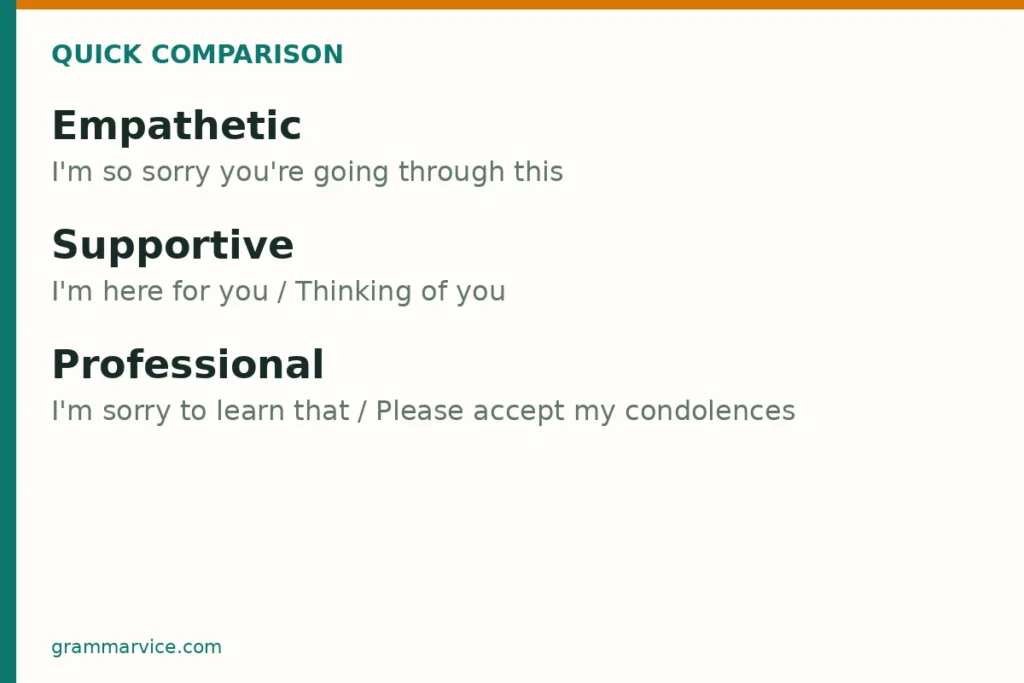
However, the phrase is quite informal and brief. In a professional setting, it may sound too casual if the news is serious — for example, if a colleague has lost a family member or is dealing with a major illness. In those cases, a more formal response, such as “I was sorry to learn about this” or “Please accept my heartfelt condolences,” may be more appropriate.
The phrase is also best used when you have a relatively close relationship with the person. If you’re speaking to a client, a senior manager, or someone you don’t know well, a more formal alternative can sound more polished and respectful.
In short, “sorry to hear that” is polite and acceptable, but it’s not always the best choice. The right alternative depends on the seriousness of the news and your relationship with the person.
Quick Top Picks: All 32 Alternatives at a Glance
Here are all 32 alternatives in this guide, in the same order as the detailed sections below:
- Oh no, that’s disappointing news.
- That’s really frustrating.
- I’m sorry things didn’t work out.
- I know you put so much into that.
- I’m sorry things didn’t go your way.
- I hope a better opportunity comes your way soon.
- That’s a rough break.
- I’m rooting for you.
- I’m sorry you’re facing this.
- That sounds like a lot to carry.
- I’m glad you told me.
- I’m sorry to hear about your surgery.
- I’m here to help however I can.
- I hope your treatment goes smoothly.
- Wishing you steady strength.
- I’m here to listen.
- Please accept my heartfelt condolences.
- I’m so sorry for your loss.
- May their memory bring you comfort.
- I’ll remember them with fondness.
- I hope you feel surrounded by love in the days ahead.
- I wish I had the right words.
- I was sorry to learn about this.
- Thank you for letting me know.
- Please let me know what support would be most useful.
- I understand this may affect your timeline.
- I appreciate you keeping me informed.
- I’m sorry you’re dealing with this.
- I understand this is a challenging time.
- Please take the time you need.
- Thank you for sharing this with me.
- I’m sorry to hear about your family situation.
Gentle Replies for Everyday Disappointments
These replies are best for minor setbacks — a missed opportunity, a cancelled plan, or a frustrating outcome. They’re warm, casual, and easy to use in texts or conversations. Text-ready replies are marked below.
1. Oh no, that’s disappointing news.
Tone: Warm and casual. A natural, sympathetic reaction to everyday bad news. Text-ready.
Example: “Oh no, that’s disappointing news. I know how much you wanted that role.”
2. That’s really frustrating.
Tone: Empathetic and informal. Acknowledges the person’s feelings without overreacting. Text-ready.
Example: “That’s really frustrating. I hope it works out better next time.”
3. I’m sorry things didn’t work out.
Tone: Gentle and supportive. Works well for missed opportunities or plans that fell through.
Example: “I’m sorry things didn’t work out. I know you were hoping for a different result.”
4. I know you put so much into that.
Tone: Personal and validating. Shows you recognize the effort behind the disappointment.
Example: “I know you put so much into that project. It’s understandable to feel let down.”
5. I’m sorry things didn’t go your way.
Tone: Kind and understated. A softer alternative that works in both casual and slightly formal settings.
Example: “I’m sorry things didn’t go your way. Let me know if you want to talk it through.”
6. I hope a better opportunity comes your way soon.
Tone: Encouraging and forward-looking. Best after a rejection or missed chance, when you want to offer hope without minimizing the disappointment.
Example: “I hope a better opportunity comes your way soon. You deserve a role that values your skills.”
7. That’s a rough break.
Tone: Casual and friendly. Best for friends or peers when the news is disappointing but not serious. Text-ready.
Example: “That’s a rough break. I hope the next one goes your way.”
8. I’m rooting for you.
Tone: Encouraging and warm. Best when you want to show support and optimism after a setback. Text-ready.
Example: “I’m rooting for you. I know you’ll bounce back from this.”
Warm Support for Hard Times and Illness
These replies are for more serious situations — ongoing stress, illness, surgery, or a difficult personal period. They’re warmer, more specific, and often include an offer of help.
9. I’m sorry you’re facing this.
Tone: Sincere and supportive. Acknowledges the difficulty directly without sounding generic.
Example: “I’m sorry you’re facing this. I’m here if you need anything.”
10. That sounds like a lot to carry.
Tone: Compassionate and reflective. Shows you understand the emotional weight of the situation.
Example: “That sounds like a lot to carry. Please let me know how I can help.”
11. I’m glad you told me.
Tone: Warm and reassuring. Validates the person’s decision to share difficult news.
Example: “I’m glad you told me. I want to support you however I can.”
12. I’m sorry to hear about your surgery.
Tone: Direct and caring. Names the specific situation, which feels more personal than a generic reply.
Example: “I’m sorry to hear about your surgery. I hope your recovery goes well.”
13. I’m here to help however I can.
Tone: Practical and supportive. Best when you genuinely want to offer assistance.
Example: “I’m here to help however I can. I can bring dinner over this week if that helps.”
14. I hope your treatment goes smoothly.
Tone: Hopeful and gentle. Best for someone undergoing medical treatment.
Example: “I hope your treatment goes smoothly. I’m thinking of you.”
15. Wishing you steady strength.
Tone: Calm and encouraging. A thoughtful alternative to “get well soon” for long-term challenges. Text-ready.
Example: “Wishing you steady strength as you go through this difficult time.”
16. I’m here to listen.
Tone: Quiet and supportive. Best when the person needs space to talk rather than advice. Text-ready.
Example: “I’m here to listen whenever you’re ready to talk.”
Condolences for Loss and Bereavement
These replies are for the death of a loved one or another profound loss. They are formal, respectful, and appropriate for cards, messages, and in-person condolences. Avoid casual language in this section.
17. Please accept my heartfelt condolences.
Example: “Please accept my heartfelt condolences on the loss of your mother.”
18. I’m so sorry for your loss.
Example: “I’m so sorry for your loss. Please let me know if there’s anything I can do.”
19. May their memory bring you comfort.
Example: “May their memory bring you comfort in the days ahead.”
20. I’ll remember them with fondness.
Example: “I’ll remember them with fondness. They were such a kind and generous person.”
21. I hope you feel surrounded by love in the days ahead.
Example: “I hope you feel surrounded by love in the days ahead as you and your family remember someone so special.”
22. I wish I had the right words.
Deeply personal losses can leave even the most caring person unsure what to say. This phrase acknowledges that you may not have the perfect words, while still showing genuine sympathy. It’s especially useful when you feel overwhelmed by the situation or when you don’t know the person well enough to offer a more personal message. It’s honest, humble, and respectful — and it avoids sounding rehearsed or dismissive.
Example: “I wish I had the right words. I’m so sorry for your loss, and I’m here for you.”
Professional and Work-Safe Replies to Bad News
These replies are designed for workplace emails, messages to colleagues, and professional conversations. They’re respectful, concise, and appropriate for a range of situations, from project setbacks to personal hardships shared at work.
23. I was sorry to learn about this.
Formal emails and professional messages often require a tone that is respectful without being overly personal. This phrase works well in that setting because it acknowledges the news clearly while maintaining appropriate boundaries. It’s suitable for colleagues, managers, and clients, and it can be used in both written and spoken communication. It also avoids the casual feel of “sorry to hear that,” making it a stronger choice for formal situations.
Example: “I was sorry to learn about the delay. Please let me know how I can support the team.”
24. Thank you for letting me know.
Responding to a colleague who shares difficult news can be tricky, especially when you want to be supportive without prying. This phrase thanks the person for trusting you with the information, which can feel validating and respectful. It’s particularly useful when a colleague shares a personal hardship or a work-related problem, and you want to acknowledge their openness before offering help or next steps.
Example: “Thank you for letting me know. I appreciate you keeping me informed.”
25. Please let me know what support would be most useful.
Workplace situations often require a balance between empathy and practicality. This phrase does both: it shows you care, and it invites the person to tell you what kind of help they actually need. Rather than making assumptions or offering vague promises, it gives the other person control over the support they receive. It’s especially useful for managers, team leaders, and colleagues who want to help in a concrete way.
Example: “Please let me know what support would be most useful. I’m happy to adjust your workload if needed.”
26. I understand this may affect your timeline.
Project delays, personal emergencies, and unexpected setbacks can disrupt work schedules. This phrase acknowledges that impact directly, which can reduce stress for the person sharing the news. It shows that you understand the practical consequences of the situation, not just the emotional ones. It’s a professional way to show flexibility and support while also keeping the conversation focused on next steps.
Example: “I understand this may affect your timeline. Let’s adjust the deadline and focus on what matters most.”
27. I appreciate you keeping me informed.
Professional updates — especially about delays, problems, or personal situations that affect work — can be difficult to share. This phrase thanks the person for their transparency, which encourages open communication. It’s a respectful, work-safe alternative that works well in emails and messages, particularly when you want to acknowledge the update without asking for personal details.
Example: “I appreciate you keeping me informed. Please let me know if anything changes.”
28. I’m sorry you’re dealing with this.
Best for: Customer service, business correspondence, or project communication when an unexpected problem or delay arises.
Example: “I’m sorry you’re dealing with this. Let’s work together to find a solution.”
29. I understand this is a challenging time.
An employee, colleague, or client may be going through a difficult period that affects their work or personal life. This phrase acknowledges the challenge without prying into details. It’s a professional, empathetic response that works well in formal emails, performance conversations, or check-ins. It also signals that you recognize the situation is serious, which can help the person feel seen and supported.
Example: “I understand this is a challenging time. Please take the time you need, and let me know how I can help.”
30. Please take the time you need.
A professional contact who is dealing with a personal hardship or a work setback may need space to recover or regroup. This phrase gives them that permission without pressure. It’s a supportive, work-safe response that works well in emails, especially when you want to reassure someone that their well-being comes first. It also avoids the need for detailed explanations or follow-up questions.
Example: “Please take the time you need. We’ll manage the workload while you’re away.”
31. Thank you for sharing this with me.
Business meetings, one-on-one conversations, and professional check-ins often involve sharing difficult updates. This phrase thanks the person for their openness, which can build trust and encourage honest communication. It’s a respectful alternative that works well when a colleague or client shares a problem, a delay, or a personal situation that affects work. It acknowledges their courage in speaking up, rather than focusing only on the problem itself.
Example: “Thank you for sharing this with me. I appreciate your honesty, and I’m here to help.”
32. I’m sorry to hear about your family situation.
Best for: Customer service, management conversations, and team communication. It acknowledges the person’s willingness to share difficult information and invites them to identify the assistance they need.
Example: “I’m sorry to hear about your family situation. Please let me know if there’s anything I can do to help.”
Example Messages: One Reply as a Text, a Card and an Email
The same news can be shared in different ways depending on the format. The examples below show how one loss can be acknowledged in a text, a card, and an email.
1. A Short Text Message
I’m so sorry for your loss. I’m thinking of you and your family. No need to reply, but I’m here if you need anything.
2. A Sympathy Card
Please accept my heartfelt condolences on the passing of your father. I will remember him with great fondness and the kindness he showed to everyone around him. I hope you and your family find comfort in the memories you shared. Thinking of you during this difficult time.
3. A Work Email
Subject: Re: Your Family Situation Dear Marcus, I’m sorry to hear about your family situation. Please take all the time you need, and let me know if there’s anything I can do to support you or adjust your workload. Best regards, Sarah
Which One Should You Use? A Quick Guide
The best phrase depends on the seriousness of the news, your relationship with the person, and the setting. Use the table below to match your response to the situation.
| Situation | Best Phrase | Why It Works |
| Everyday disappointment | Oh no, that’s disappointing news. | Warm, casual, and appropriate for a minor setback. |
| A job loss or missed opportunity | I’m sorry things didn’t go your way. | Acknowledges effort without sounding overly formal. |
| Illness or hospital treatment | I’m sorry you’re going through this. | Shows care and support during a serious health situation. |
| A death or serious loss | Please accept my heartfelt condolences. | Respectful, formal, and appropriate for bereavement. |
| A professional setback at work | I was sorry to learn about this. | Polite, work-safe, and suitable for colleagues and clients. |
| A personal hardship shared by a friend | I’m here for you. | Simple, warm, and focused on support rather than advice. |
| A difficult update from a customer or client | I’m sorry you’re dealing with this. | Professional, empathetic, and focused on finding a solution. |
| When you want to offer practical help | Please let me know what support would be most useful. | Gives the person control over the kind of help they receive. |
What Not to Say: Responses That Hurt
Even well-meaning words can hurt when they minimize a person’s experience, offer unsolicited advice, or make the conversation about you. The phrases below are common, but they often feel dismissive in a difficult moment.
- “Everything happens for a reason.” This can sound dismissive, especially after a loss or serious illness. It suggests the pain has a purpose, which may not comfort the person.
- “I know exactly how you feel.” Even if you have had a similar experience, each person’s grief or difficulty is unique. This phrase can make the conversation about you rather than the person who is hurting.
- “That’s a shame” (said about a death). This phrase is far too casual for bereavement. It can sound flippant and minimizing when a serious loss is involved.
- “At least…” Starting with “at least” can minimize the person’s experience. For example, “At least you have other opportunities” may feel dismissive after a job loss.
- Over-apologising. Repeated apologies can shift attention to your discomfort rather than the other person’s needs. One sincere apology is usually enough.
If you are unsure what to say, choose a simple, sincere phrase and listen. Acknowledging the difficulty without trying to fix it is often the most helpful response.
If you are still wondering what to say instead of sorry to hear that, think of each option above as a sorry to hear that synonym you can tune to the moment: the list of sorry to hear that alternatives runs from a two-word text to a formal condolence, and what to say other than sorry to hear that usually comes down to naming the situation and offering one concrete kindness.
Context decides the register. Learning how to say sorry to hear that professionally — the professional way to say I am sorry to hear that in an email to a manager or client — is mostly about keeping it brief, warm, and free of personal questions. The same care covers how to respond to bad news over text and how to respond to bad news professionally, where short, empathetic responses to bad news land better than long explanations. And when the news is a bereavement, other ways to say sorry to hear about your loss — a direct condolence, a memory, an offer of help — matter far more than variety. For the situations where the news itself is the problem, see our guides to other ways to say unfortunately and other ways to say that’s not good; for the dictionary sense of the word itself, see Cambridge Dictionary on “sorry”.
Frequently Asked Questions
What’s the most comforting way to say “sorry to hear that”?
The most comforting response combines a clear expression of sympathy with a personal acknowledgement of what they are facing. Instead of using only “sorry to hear that,” mention the situation and offer a specific form of support. For example, saying “I’m so sorry you’re facing this. I’m here for you, and I can bring dinner on Thursday if that would help” feels warmer and more genuine than a generic reply.
Can I say “sorry to hear that” in a professional message or work email?
Yes, “sorry to hear that” can be professional when the tone is respectful and the message is kept concise. It works best in short emails and messages where you want to acknowledge bad news without becoming too personal. For more formal situations, use “I was sorry to learn about this” or “Thank you for letting me know,” which sound more polished and work-safe.
What should I say instead of “sorry to hear that” when someone has died?
For a death, choose a direct condolence such as “Please accept my heartfelt condolences” or “I’m so sorry for your loss.” These phrases acknowledge the seriousness of the loss without sounding casual. Add a brief personal memory or an offer of practical help, and avoid phrases that minimize the grief.
What are short but heartfelt alternatives I can send in a text?
Short replies can still feel heartfelt if they are specific and supportive. “Thinking of you” and “I’m here for you” work well in texts because they are warm, brief, and do not require a long reply. You can add a simple offer, such as “Let me know if you need anything,” to make the message feel more personal.
How do I respond if someone says “sorry to hear that” to me?
A simple thank-you is usually enough. You can say “Thank you for your kind words” or “I appreciate you reaching out.” If you want to share more, keep it brief and honest, such as “It’s been a difficult week, but your support means a lot.” You do not need to explain everything or apologize for your feelings.
How can I make my words feel more genuine and less generic?
Use the person’s name, mention the specific situation, and offer a concrete form of help rather than a general promise. A message such as “I’m really sorry about your diagnosis. I’m here to listen, and I can drive you to your appointment on Tuesday” feels more genuine because it shows attention and action. Avoid copying a stock phrase without adapting it to the person.
Conclusion
Choosing a better way to say “sorry to hear that” does not require a perfect phrase. It requires matching your words to the seriousness of the news, the closeness of your relationship, and the setting. A short, thoughtful message can comfort someone in a difficult moment, while a formal, respectful reply can support a colleague at work. The best responses are specific, sincere, and focused on the other person rather than on finding the “right” words. Start with one phrase from this guide that fits the situation, add a personal detail, and offer help you can actually provide. That combination turns a generic apology into a message people remember.